


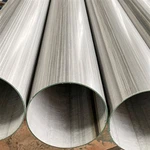
Incoloy Steel Plate
Why Choose Us
Quality Assurance
In Order To Ensure The Quality Of Our Products, We Have Specialized Testing Equipment And Quality Inspectors.
Good Service
Good After-Sale Service, Handling The Customer Complaint And Solve Problem For Customers.
Reasonable Price
Our Products Are Complete In Variety, Good In Quality, Reasonable In Price.
Fast Delivery
Complete Packaging To Ensure Products Quality, And Transport To The Destination In The First Time.
What is Incoloy Steel Plate
Incoloy Steel Plate is a nickel-chromium-iron alloy steel plate that has excellent resistance to corrosion and high-temperature oxidation. It is commonly used in high-temperature applications such as heat exchangers, furnace components, chemical processing equipment, and nuclear power plant equipment. Incoloy Steel Plate is able to maintain its structural integrity even at high temperatures of up to 1000°C, making it a suitable material for use in extreme environments.


Benefits of Incoloy Steel Plate
Corrosion resistance
Incoloy steel plates offer excellent corrosion resistance in a variety of harsh environments, including acidic and alkaline conditions. This makes them ideal for use in chemical and petrochemical industries, as well as in marine and offshore applications.
High-temperature performance
Incoloy steel plates exhibit exceptional high-temperature strength and oxidation resistance, making them ideal for use in high-temperature environments such as furnace components, gas turbine components, and heat exchangers.


Mechanical properties
Incoloy steel plates have excellent mechanical properties, including high tensile strength and toughness. This makes them ideal for use in applications subjected to heavy loads or high stress.
Weldability
Unlike other high-performance alloys, Incoloy steel plates have good weldability, making them easy to weld and join with other materials.
What are the Applications of Incoloy Steel Plate
Chemical processing equipment
Incoloy steel plates are widely used in chemical processing equipment due to their excellent corrosion resistance.
Aerospace industry
Incoloy steel plates can be used in aircraft components such as jet engine parts, exhaust systems, and landing gear.
Power generation
Incoloy steel plates are used in power generation equipment due to their high temperature and pressure-resistant properties.
Oil and gas industry
Incoloy steel plates are commonly used in oil and gas industry due to their excellent resistance to corrosion and high temperatures.
Heat exchangers
Incoloy steel plates are used in heat exchangers due to their excellent thermal conductivity.
Medical devices
Incoloy steel plates are used in medical devices due to their biocompatibility and corrosion resistance.
Nuclear industry
Incoloy steel plates are used in nuclear industry due to their excellent resistance to corrosion and high temperatures.
Food processing equipment
Incoloy steel plates are used in food processing equipment due to their excellent corrosion resistance and easy cleaning properties.
Types of Incoloy Steel Plate

Incoloy 800
This grade of Incoloy steel is a low-carbon alloy that is highly resistant to oxidation and carburization at high temperatures. It is often used in furnace and heat-treating applications.
Incoloy 825
This grade of Incoloy steel contains a higher amount of nickel and molybdenum than Incoloy 800, making it highly resistant to corrosion and pitting in acidic environments. It is often used in chemical processing applications.
Incoloy 800H/HT
These grades of Incoloy steel are variations of Incoloy 800 that have been specifically designed for high-temperature applications. They have a higher carbon content, which imparts greater creep strength and resistance to thermal fatigue.
Incoloy 20
This grade of Incoloy steel is highly resistant to corrosion from acids, alkalis, and other chemicals. It is commonly used in chemical processing and petrochemical applications.
Incoloy Steel Plate Material
Incoloy Sheet & Plates are stainless steel, titanium, and aluminum content plates and also it contains chromium that ensures to form and sustain an adequate level of chromium oxide. These sheet and plates generate superior corrosion resistance to chloride and oxidation resistance at high elevated temperature.
Components of Incoloy Steel Plate
Nickel
Incoloy steel contains a high percentage of nickel, typically around 60-70%. This element is critical to the alloy's ability to resist oxidation and corrosion in high-temperature applications.
Chromium
Incoloy steel also contains chromium, which improves its resistance to corrosion and oxidation. Chromium typically comprises around 20-25% of Incoloy's composition.
Iron
Iron is a fundamental component of Incoloy steel, typically comprising around 5-20% of its composition. It provides the alloy with its strength and durability.
Molybdenum
Some Incoloy alloys also contain molybdenum, which further enhances their resistance to corrosion and high-temperature environments.
Copper
Incoloy's high nickel content is often balanced by the addition of copper, which improves its ability to withstand acidic environments.
Carbon, silicon, and other trace elements
Incoloy's exact composition may vary depending on its intended application and specific manufacturing process. Small amounts of carbon, silicon, and other trace elements may be added to improve the alloy's performance in certain environments.
Maintenance Tips for Incoloy Steel Plate
Regular Cleaning
Stainless steel sheets should be cleaned regularly to remove dirt, dust, and grime. Use a mild detergent or soap and warm water, and a soft cloth or sponge to wipe down the surface. Avoid using abrasive materials, such as steel wool or abrasive cleaning pads, as these can scratch the surface.
Avoid Harsh Chemicals
Harsh chemicals, such as bleach and ammonia, can damage the surface of stainless steel sheets. Instead, use mild cleaning products or specialized stainless steel cleaners.
Use the Grain
When cleaning stainless steel sheets, always wipe with the grain to avoid scratching the surface. The grain refers to the direction of the brushed finish on the surface.
Dry Thoroughly
After cleaning, be sure to dry the stainless steel sheets thoroughly to avoid water spots and streaks. Use a clean, dry cloth to buff the surface.
Prevent Damage
Avoid exposing stainless steel sheets to harsh chemicals, extreme temperatures, and abrasive materials. Use protective pads or mats under appliances, and avoid placing hot or sharp objects directly on the surface.
Polishing
Stainless steel sheets can be polished to restore their shine and remove any scratches or stains. Use a specialized stainless steel polish and a soft cloth to gently buff the surface.
How To Choose Chromium Alloy Steel Plate
Strength
One of the most important considerations when choosing a steel grade is its strength. The strength of steel is typically measured in terms of its yield strength, which is the amount of stress it can withstand before it begins to deform permanently. The higher the yield strength, the stronger the steel. When selecting a steel grade, it's important to consider the level of strength required for your application. For example, if you're building a bridge or other structure that will be subjected to heavy loads, you'll need a high-strength steel like ASTM A709 or ASTM A992.
Corrosion Resistance
Corrosion is a major concern for many applications that involve steel, especially those that will be exposed to harsh environments such as saltwater or acidic chemicals. Stainless steel grades like 316l or 304L are popular choices for applications requiring corrosion resistance due to their ability to resist rust and corrosion.
Weldability
The ability to weld steel is an important consideration for many
applications. Some steel grades are more weldable than others, and the type of welding process used can also impact the weldability of the steel. If welding is a critical part of your project, it's important to select a steel grade that is easily weldable. Steel grades like A36 or A572 are typically good choices for welding applications.
Formability
Formability refers to the ability of a steel grade to be formed into a desired shape without cracking or breaking. Some steel grades are more formable than others, and the level of formability required for your application will depend on the complexity of the shape you need to create. Steel grades like A1011 or A606 are good choices for applications that require high formability.
Heat Treatment
Some steel grades can be heat-treated to enhance their strength, hardness, or other properties. If you need a steel grade that can be heat-treated, it's important to select a grade that is compatible with the type of heat treatment you plan to use. Steel grades like 4140 or 4340 are popular choices for applications that require heat treatment.
Machinability
Machinability refers to the ease with which a steel grade can be machined or cut into a desired shape. Some steel grades are more machinable than others, and the level of machinability required for your application will depend on the complexity of the shapes you need to create. Steel grades like 12L14 or 1215 are popular choices for applications that require high machinability.
Incoloy steel plate is made by melting the base alloys in an electric furnace at over 1600 °C for 8-12 hours. It is then annealed at over 500 °C to alter the chemical and physical properties and remove impurities. The mill scale (produced through annealing) is removed from the surface using hydrofluoric acid. Annealing and descaling are repeated until the steel is melted. Melted steel is cast for rolling and shaping into the final form, depending on the required dimensions.
In general, incoloy steel plate is created using one of two processes: an electric arc furnace (EAF) or a blast furnace. The blast furnace is the initial process of turning iron oxides into steel. Pig iron is produced in the blast furnace using coke, iron ore, and limestone. The EAF differs from the blast furnace in that it creates molten steel by melting scrap steel, direct reduction iron, and/or pig iron using an electrical current.
Our Factory
Huitong Pipeline Group is a one-stop manufacturer of stainless steel pipes, pipe fittings which was established in 1978. Our product fields cover pipe fittings, flanges, steel plates, round bars, and customized pipe spools etc., we can provide materials such as stainless steel, duplex steel, nickel alloy and some carbon steel. Especially the stainless steel S31803, S32205, S32750, 904L, 254SMO...


FAQ
Q: What is Incoloy Steel Plate?
Q: What are the advantages of Incoloy Steel Plate?
Q: What are the applications of Incoloy Steel Plate?
Q: Is Incoloy Steel Plate expensive?
Q: What are the different grades of Incoloy Steel Plate?
Q: Can Incoloy Steel Plate be machined?
Q: How is Incoloy Steel Plate manufactured?
Q: What is the difference between Incoloy and Inconel?
Q: Is Inconel better than stainless steel?
Q: Is INCONEL rust proof?
Q: Can INCONEL be welded?
Q: Is Inconel cheaper than titanium?
Q: What causes Inconel to crack?
Q: What is the difference between Inconel and Monel?
Q: Is Inconel hard to cut?
Q: Can Inconel be welded to steel?
Q: Can Inconel become magnetic?
Q: What is the difference between Inconel and incoloy?
Q: What is the strongest Inconel alloy?
Q: Can Inconel be welded to stainless steel?