


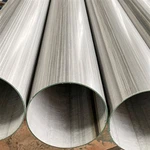
Nickel Alloy Pipe
Why Choose Us
Quality Assurance
In Order To Ensure The Quality Of Our Products, We Have Specialized Testing Equipment And Quality Inspectors.
Good Service
Good After-Sale Service, Handling The Customer Complaint And Solve Problem For Customers.
Reasonable Price
Our Products Are Complete In Variety, Good In Quality, Reasonable In Price.
Fast Delivery
Complete Packaging To Ensure Products Quality, And Transport To The Destination In The First Time.
What is Nickel Alloy Pipe
Nickel alloys are some of the most useful materials for manufacturing technically superior pipes and tubes for industrial applications. Their inherent properties make them viable for a wide range of uses. Nickel alloys are exceptionally corrosion resistant and can be used in high-temperature environments.


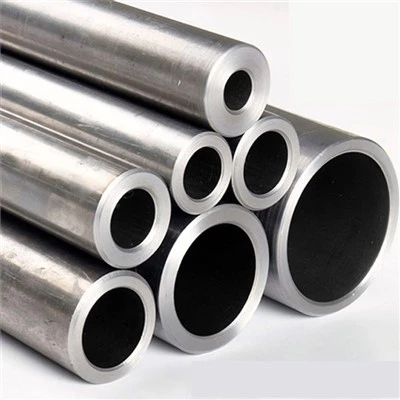


Benefits of Nickel Alloy Pipe
High resistance to corrosion
Nickel alloy pipe is highly resistant to corrosion and oxidation, making it ideal for use in corrosive and high-temperature environments.
Increased strength
Nickel alloy pipe is stronger than many other types of pipes and can withstand high pressures and temperatures.
Versatility
Nickel alloy pipe can be used in a wide range of applications, including chemical processing, power generation, and oil and gas production.
Excellent thermal conductivity
Nickel alloy pipe has high thermal conductivity, making it effective in transferring heat from one point to another.
What are the Applications of Nickel Alloy Pipe
Aerospace
The aerospace industry is one of the largest users of nickel-based alloys because of the high operating temperatures common on high-performance aerospace equipment. Turbine blades and rocket engine components are often manufactured from alloys like Inconel.
Chemical Processing
The chemical processing industry often requires materials that are highly resistant to corrosive environments. Nickel alloys have exceptional corrosion resistance, especially when alloyed with elements such as chromium and nickel, high iron content alloys can have reduced corrosion resistance. Typical applications can include tanks, piping, and mixing devices.
Oil and Gas
The oil and gas industry is complex and involves everything from the extraction of oil to the processing of fuels, plastics, and other complex materials. Because of that, materials are often required to withstand high temperatures and pressures, and corrosive environments. Nickel alloys are a good fit for these situations. Typical applications can include pumps, pipes, pressure vessels, and heat exchangers.
Medical Equipment
Medical equipment, such as surgical instruments, must often be sterilizable either with strong solvents or high temperatures. Nickel alloys are ideal for this service environment. Shape memory alloys like Nitinol are also popular for stents, as they can be implanted in a collapsed state and expand once in position. Nickel alloys are also used for orthopedic implants.
Electrical and Electronic Applications
Nickel alloys like Monel, which are alloyed with copper, offer good electrical conductivity with the added benefit of corrosion resistance. For those reasons, these alloys are ideal for electrical contacts in corrosive environments. Some nickel alloys, such as Ni-Fe alloys have low coercivity which makes them ideal for soft magnetic applications like transformers or memory storage devices.
Marine Applications
Marine environments can be extremely corrosive. Not many alloys can withstand prolonged exposure to salt water and salt spray. Nickel alloys, especially when alloyed with copper, are highly resistant to marine environments. Typical applications can include propellers, bilge pumps, and valves.
Types of Nickel Alloy Pipe


Inconel
Inconel is a trade name for a type of nickel alloy that contains chromium, molybdenum, and iron as its main alloying elements. It is known for its oxidation resistance, excellent performance in a high-temperature environment, and mechanical strength. Inconel can be difficult to cold form due to its rapid work-hardening behavior. Typical alloys are Inconel 625, 718, and 600.
Monel
Monel is a trade name for a group of copper-based nickel alloys. Monel has high strength and excellent saltwater resistance, as well as the ability to perform well in low-temperature environments, i.e there is not a large reduction in ductility and there is an increase in hardness and strength. Monel tends to work harden during cold forming, making it difficult to process. Typical alloys are Monel® 400, R-405, and K-500.
Hastelloy
Hastelloy is the trade name for a highly corrosion-resistant alloy of either a nickel-chromium alloy or a nickel-molybdenum alloy. In addition, Hastelloy also has good thermal stability and is used in the aerospace and chemical processing industries. Typical alloys include C-22 and C-276.
Nickel-Copper Alloys
Nickel-copper alloys have excellent saltwater corrosion and fouling resistance. For that reason, they are used extensively in the marine industry. Iron, tin, and manganese are sometimes added to further improve corrosion resistance. The copper content can be anywhere from 55 to 91.5%, with nickel being the next largest alloying element. The other alloying elements make up a small percentage of the total weight. Monel® is considered a nickel-copper alloy.
Nickel-Iron Alloys
Nickel-iron alloys have good ductility, low thermal expansion, and corrosion resistance. These alloys also have soft magnetic properties. These alloys are used in applications where low thermal expansion is desired like sensitive scientific equipment or where soft magnetic properties are beneficial, for example in transformers. A common trade name for a nickel-iron alloy is Invar.
Nickel-Chromium Alloys
Nickel chromium alloys have excellent corrosion and oxidation resistance while also maintaining their strength at elevated temperatures. They also have high electrical resistivity. This makes nickel-chromium alloys especially fit for application as heater elements, such as those found in ovens or toasters, for example. Nickel chromium alloys can have a melting point of over 1300 °C. These alloys typically have a high nickel content, 70%.

Nickel Alloy Pipe Material
Nickel alloys are typically made from a mixture of various metals and nickel. Although not all metals can be effectively combined with nickel. Some of the most common elements that can be alloyed with nickel are iron (Fe), chromium (Cr), aluminum (Al), molybdenum (Mo), copper (Cu), cobalt (Co), and titanium (Ti). These elements can be combined to produce alloys with different properties. For example, nickel, iron, molybdenum, and chromium alloys, such as stainless steel Type 316, have excellent corrosion resistance.
Components of Nickel Alloy Pipe
This Nickel Alloy Pipe Has Approximately 52.5% Nickel, 20% Chromium And 3% Molybdenum. Fabrication And Welding Of This Alloy Are Easy, And It Has Good Resistance To Fatigue. Two Common Heat Treatments For This Alloy Are Solution Annealing And Age Hardening.

Maintenance Tips for Nickel Alloy Pipe
Regular cleaning
Nickel alloy pipes need to be cleaned on a regular basis in order to prevent any accumulation of dirt and debris. The pipes should be wiped or flushed with water to avoid corrosion and contamination.
Proper storage
The pipes should be stored in dry and well-ventilated areas. They should be kept away from moisture, extreme heat, and direct sunlight.
Use proper tools and equipment
The use of proper tools and equipment during installation, maintenance, or repair of nickel alloy pipes is important. This can prevent damage to the pipes and ensure their longevity.
Regular inspection
Nickel alloy pipes should be inspected on a regular basis to detect any potential issues early on and address them before they become major problems.
Lubrication
Nickel alloy pipes that are used in high-temperature or high-pressure applications may require lubrication to prevent friction, wear and tear.
Avoid using harsh chemicals
Harsh chemicals and solvents should be avoided when cleaning nickel alloy pipes as they can cause damage to the pipes and reduce their lifespan.
Properties of Nickel Alloy Pipe
Cupro-nickel is a copper-nickel alloy that contains anywhere between 2-45% nickel. This makes cupro nickel pipes highly resistant to corrosion, even in seawater or marine environments. Cupro nickel also has excellent mechanical properties, including high strength, ductility, and durability. Other properties of cupro-nickel pipes include good thermal and electrical conductivity, high melting point, and low thermal expansion. All these properties make cupro nickel pipes highly sought after in different industries such as marine, petrochemical, oil and gas, and power generation.
High Nickel alloy pipe fittings shows high strength, ability to resist corrosion, with an excellent finish. The dimensional accuracy and chemical resistance ability to these fittings make them capable of working in any operational conditions. These nickel alloy for pipe fittings can work consistently as they are durable. Elements present in nickel alloy undergo various processes including heat treatment, cold or hot working, and annealing to make them suitable to work smoothly. Also, the selected raw material, i.e., nickel alloy offers outstanding mechanical properties to pipe fittings.
Consider the Application
The first factor to consider when selecting a copper-nickel pipe is the application of the pipe. Different copper nickel pipes are suitable for different applications, depending on the environment, fluid, and temperature. Copper nickel pipes can be used for seawater, petrochemicals, food industries, HVAC, and more. Seawater applications require copper nickel pipes with a high nickel content to offer maximum corrosion resistance. Petrochemical applications require high strength and durability copper nickel pipes to withstand high pressures and temperatures. Food industries will require copper nickel pipes with high-level hygiene standards. Therefore, it is vital to consider the application of the pipe to choose the right copper-nickel pipes.
Consider Pipe Properties
The properties of the copper-nickel pipes are also essential when selecting the right pipe for your project. Copper nickel pipes come in different grades, each with unique properties. Copper nickel pipes are available in 70/30 and 90/10 grades. The 70/30 grade copper nickel pipes have higher strength and durability and are ideal for high-pressure applications. The 90/10 copper nickel pipes have a very high resistance to seawater corrosion and are suitable for seawater applications. Therefore, it is crucial to consider the properties of the this to choose the right grade for your project.
Consider Pipe Dimensions
Pipe dimensions are another critical factor to consider when selecting copper-nickel pipes. Copper nickel pipes come in various sizes and thicknesses. It is essential to have accurate measurements of your project to choose the right size and thickness of the copper-nickel pipes. Choosing the wrong dimensions can lead to material wastage and costly errors.
Consider the Quality of the Pipe
The quality of the copper-nickel pipes are another factor to consider. Choosing a high-quality copper nickel pipe that meets industry standards is essential. A high-quality this product will have good mechanical properties, chemical properties, excellent corrosion resistance, and reliability. Purchasing copper nickel pipes from reputable suppliers offering quality assurance and reliable after-sales service is crucial.
Consider the Cost
The cost of the copper-nickel pipe is also essential to consider when selecting the right pipe for your project. Copper nickel pipes come at different prices depending on the grade, size, thickness, and supplier. It is essential to balance the cost against the quality to get the best value. Therefore, it is vital to consider the quality to get value for your money.
Material Selection
The process begins with selecting the right materials. High-quality copper and nickel are sourced, ensuring they meet industry specifications.
Alloying
Copper and nickel are then carefully melted together in precise proportions to create the alloy. The ratio of copper to nickel can vary depending on the specific application of the pipes.
Casting
The molten alloy is cast into various shapes and sizes, depending on the requirements. This can include pipes of different diameters and lengths.
Cooling and Solidification
Once cast, the pipes are allowed to cool and solidify. This step is critical to ensure the pipes have the right structural integrity.
Machining
The pipes are then machined to achieve the desired dimensions and smooth surfaces. This step requires precision to meet the industry’s strict tolerances.
Quality Control
Before the pipes are ready for use, they undergo rigorous quality control tests to ensure they meet all safety and performance standards. This includes tests for corrosion resistance, pressure resistance, and more.
Finishing
Finally, the pipes are given a finishing touch, which may involve surface treatment or coating to further enhance their corrosion resistance.
Our Factory
Huitong Pipeline Group is a one-stop manufacturer of stainless steel pipes, pipe fittings which was established in 1978. Our product fields cover pipe fittings, flanges, steel plates, round bars, and customized pipe spools etc., we can provide materials such as stainless steel, duplex steel, nickel alloy and some carbon steel. Especially the stainless steel S31803, S32205, S32750, 904L, 254SMO...


FAQ
Q: What are the properties of nickel alloys?
Q: What are the advantages of nickel alloy?
Q: What does nickel alloy do?
Q: What are 5 properties of alloys?
Q: What are 5 physical properties of nickel?
Q: What is nickel pipe used for?
Q: Is nickel alloy better than stainless steel?
Q: Which is better copper or alloy?
Q: What are 3 common uses of nickel?
Q: What are the features of alloys?
Q: Is nickel an alloy?
Q: Is nickel alloy hard?
Q: Is nickel alloy brittle?
Q: Is Inconel the same as nickel alloy?
Q: Is nickel pipe magnetic?
Q: Does nickel alloy tarnish?
Q: Is stainless steel a nickel alloy?
Q: What is unique about nickel?
Q: What is the other name for nickel?