


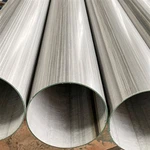
Inconel Steel Plate
What is Inconel Steel Plate
Inconels are a class of nickel-chrome-based super alloys characterized by high corrosion resistance, oxidation resistance, strength at high temperatures, and creep resistance. Inconel is able to withstand elevated temperatures and extremely corrosive environments due to two factors.


Benefits of Inconel Steel Plate
Heat Resistance
Another critical factor that makes Inconel tubes an excellent choice in construction is their ability to withstand extreme heat. Inconel tubes are highly resistant to oxidation, which is the process of metal deterioration due to exposure to oxygen at high temperatures. This characteristic makes them ideal for high-temperature steam lines, furnace hardware, heat exchangers, and aerospace applications. Inconel alloy can also operate at high temperatures without suffering from mechanical distortion and cracking, making it an ideal solution for the aviation industry.
Strength and Durability
Inconel tubes offer excellent strength and durability, surpassing traditional materials such as steel or aluminium. The alloy's excellent tensile strength and hardness make it ideal for use in tough mechanical applications that require good resistance to wear and tear. Inconel tubes can withstand high-pressure levels and prevent warping and buckling under extreme pressure, making them a perfect material for use in pressure vessels, valves, and other applications in the oil and gas industry.
Versatility
Inconel tube has many applications, including aerospace, automotive, medical, and chemical industries. Its versatility makes it a popular choice for many construction and infrastructure projects, where the material's unique properties provide unmatched functionality and security. The alloy's resistance to wear and tear, corrosion, and high temperatures makes it the ideal material for critical applications such as heat exchangers, pressure vessels, and tubing.
Cost-effectiveness
Although Inconel alloys may be more expensive than traditional materials, their long-lasting durability and resistance to harsh conditions make them a cost-effective investment in the long run. Inconel tubes' low maintenance costs and a longer lifespan than other materials make them a cost-effective solution for various construction and infrastructure projects, from high-pressure pipelines to chemical plant reactors.
Why Choose Us
Customer Service
We earn your respect by delivering on time and on budget. We built our reputation on exceptional customer service. Discover the difference it makes.
Expertise and Experience
Our team of experts have years of experience in delivering high quality services to our clients. We hire only the best professionals who have a proven track record of delivering exceptional results.
Quality Assurance
We have a rigorous quality assurance process in place to ensure that all our services meet the highest standards of quality. Our team of quality analysts checks each project thoroughly before it is delivered to the client.
State-of-the-art Technology
We use the latest technology and tools to deliver high quality services. Our team is well-versed in the latest trends and advancements in technology and uses them to provide the best results.
Competitive Pricing
We offer competitive pricing for our services without compromising on quality. Our prices are transparent, and we do not believe in hidden charges or fees.
Customer Satisfaction
We are committed to delivering high quality services that exceed our clients' expectations. We strive to ensure that our clients are satisfied with our services and work closely with them to ensure their needs are met.
Although both metals may have a similar physical appearance, they are different in many other aspects. Moreover, both metals come in different grades, and no two alloys of the same metal have similar properties. For instance, grade 316 stainless steel alloys can perform better under chloride solutions than grade 304 stainless steel alloys. Moreover, the strength of the alloy may change depending upon the heat treatment received. For example, the tensile strength of “as-rolled” Inconel bars is more than solution-treated bars. Even a slight variation in the secondary elements can alter the final strength profile.
The table below compares the essential properties of the two most popular alloys, Inconel 625 and 304 stainless steel.
|
|
304 Stainless Steel |
||
|
Tensile strength |
135,000 psi (930 MPa) |
75,000 psi (515 MPa) |
|
|
Melting point |
2,460°F (1350°C) |
2,550°F (1400°C) |
|
|
Operating temperature |
1,800°F (982°C) |
1,697°F (952°C) |
|
|
Yield strength |
75,000 psi (517 MPa) |
30,000 psi (205 MPa) |
|
|
Elongation |
42.5% |
35% |
|
|
Machinability |
Poor |
Poor |
|
|
Corrosion resistance |
Good, especially resistant to pitting and crevice corrosion |
Good, offers excellent resistance to most oxidizing acids |
|
According to the comparison above, applications requiring high tensile strength at high temperatures, Inconel 625 would be an ideal choice over 304 stainless steel; therefore, Inconel 625 is used in heat exchangers and gas turbines. On the other hand, 304 stainless steel, due to its low operating temperature range, is good for applications requiring dimensional stability coupled with high corrosion resistance at low temperatures.
When it comes to corrosion resistance, both have specific application areas. Inconel 625 offers outstanding corrosion resistance to chloride-ion and sea waters. Due to its high-corrosion fatigue strength, the alloy offers protection against pitting and crevice corrosion; thus, it's used as wiring rope for mooring cables, exhaust ducts for Navy utility boats, and steam line bellows. On the other hand, 304 stainless steel resists corrosion from oxidizing acids such as sulphuric acids and is often used in chemical containers, including those for transport, and automotive and aerospace components.
However, it's important to note that both alloys have poor machining characteristics. Overcoming the machining challenges of Inconel vs. stainless steel is imperative to keeping material waste and costs under control.
Challenges With Machining Inconel and Stainless Steel
While it's important to understand the differences between Inconel vs. stainless steel, it's just as essential to understand how the unique properties of each contribute to its machinability.
For example, the strength of Inconel makes it hard to machine, as it is prone to work hardening and can therefore damage tools or deform the workpiece. One of the best ways to overcome this is to solutionize Inconel alloys before machining to release the stress. It is also advisable to use ceramic tools for achieving continuous cuts and reducing work hardening while cutting Inconel blocks.
Cutting stainless steel with precision is also a challenge owing to its high nickel content, which leads to severe plastic deformation during the machining process. The surface gets hard to penetrate with subsequent attempts. As a result, the alloy requires more cutting force, which leads to tool failure due to excess frictional heat. Using industrial band saws and following the proper cutting process can help you achieve precision faster and more easily.
Unless you have the right setup and expertise to deal with these challenging metals, it's better to outsource the task to a knowledgeable service provider.
5 Uses for Inconel and Why to Use it
Inconel is a material that is precisely engineered for some of the hardest environments of usage to be found in production. When compared to stainless steel, Inconel has an extremely high temperature tolerance and does not lose as much tensile strength at 2,000 degrees F as other steel varieties.
However, Inconel is an expensive material, one which is best reserved for the right use conditions where other materials won't work as well. Keeping this in mind, here is an overview of the properties of Inconel, as well as a few instances of applications where Inconel would be favored over most stainless steel formulations:
Five Inconel Use Case Examples
Oil & Gas Extraction
Inconel is preferably used in the oil and gas production industry owing to its high temperature tolerance and oxidation resistance properties. The oil and gas industries require super-alloy metals, such as Inconel, that can endure intense conditions and volatile, corrosive gases.
Inconel 625 superalloy is particularly useful for processing systems needed for the production of natural gas. Owing to the especially high thermal fatigue power and oxidation resistance of Inconel 625 Pipes, it is also used for the segregation of extracted fluids or for inline steel transfer pipes.
Heat Treat Applications
Inconel is considered to be resistant to severe temperatures and maintains adequate tensile strength at elevated temperatures to sustain mild loads Inconel 625 maintains 13.3 KSI tensile strength at 2,000 degrees F. This makes Inconel the perfect basket material for heat treatment applications— preferably compared to stainless steel alloys such as Grade 304, 316 and 330 SS.
Compared to most stainless steel alloys, a basket manufactured of super alloys such as Inconel will not lose shape as easily when carrying parts in a rigorous heat treatment procedure.
Rapid Temperature Changes
Some manufacturing processes can combine high and low-temperature processes in rapid succession. Many Inconel alloys maintain outstanding oxidation tolerance at high and low temperatures, enabling a single basket made of Inconel to be used in procedures where temperatures range between near cryogenic lows and heat treatment highs.
Saltwater Applications
Inconel Alloy 600 Pipes is often utilized in marine applications owing to its exceptional tolerance to sodium chloride (salt) at varying temperatures. Therefore, in the case of processes that use salt or factory locations along the coast, Inconel may be suitable for washing basket parts.
Some stainless steel alloys, however, also show outstanding tolerance to saltwater. So, when will Inconel be deemed to be preferable?
Generally speaking, this superalloy would actually be much more effective than grade 316 stainless steel if high temperatures of more than 1,000 degrees F were not of importance. Inconel can retain its oxidation tolerance at higher temperatures than 316 SS would.
Jet Engines
Jet engines are exceptional in their ability to survive intense temperatures, both high and low, even during operation. As stated on the environment training website, at 36,000 feet. (Well within a passenger jet's standard cruising altitude), the average air temperature is-56.3 degrees C (-69.3 degrees F), although the combustion cycle that reach temperatures of 1,150 degrees C (2120 degrees F).
Cooling techniques are used to quickly decrease temperatures, but they will also readily exceed the tolerances of certain metals. Inconel 600 maintains high oxidation tolerance and tensile strength despite frequent changes in temperature from the combustion cycle and cooling techniques utilized in the aerospace industry.
Inconel is the best material where the intense temperature and chemical tolerance are a must, because when the temperature is high, the oxidation tolerance of certain metals will usually be compromised.
Inconel vs Titanium: Understanding the Use Cases of High Spec Metals
Inconel and titanium are both high-specification metals suitable for a wide variety of high-stress and corrosive applications. Though both have desirable physical and mechanical properties that make them suitable for extreme conditions, Inconel and titanium are very different metals. Here, we'll look at the main properties, manufacturing concerns, and use cases that differentiate Inconel vs. titanium.


Inconel
Inconel is a trade name for a family of nickel-chromium superalloys made by Special Metals Corporation. It has an incredibly high tolerance for extreme temperatures and can withstand about 2,000°F (depending on the alloy) without losing strength. It also performs well in cryogenic temperatures.
In addition to its extreme temperature performance, Inconel has excellent mechanical properties at room temperature. Inconel 725, for example, has a tensile strength of up to 180 ksi—twice the strength of structural steel. Some Inconel alloys, such as Inconel 718, are precipitation hardened to increase their strength even further. Inconel is also highly resistant to corrosion, including oxidation, pitting, crevice corrosion, and corrosion cracking.
The properties of Inconel make it a valuable metal for the most demanding conditions. However, like most superalloys, it is significantly more expensive than common metals like steel, aluminum, and titanium.
Machining Inconel
The strength that makes Inconel such a valuable material for extreme conditions also makes it tough to machine. It's exceptionally hard and is prone to work hardening during machining, which can damage cutting tools and deform the workpiece.
Stress-relieving Inconel through solutionizing before machining can help reduce surface hardness and limit work hardening, reducing the stress and wear on tooling. Ceramic tooling is recommended, as it is capable of fast, continuous cuts that minimize work hardening. It is also important to avoid pecking, which can increase work hardening.
Welding Inconel
Most Inconel is difficult to weld because the welds tend to crack. However, certain Inconel alloys are designed to be weldable. These are usually TIG (tungsten inert gas) welded with Inconel 625, the most weldable Inconel alloy, as a filler metal. While TIG welding doesn't typically require a filler, it's recommended for Inconel welding because of how hard it is to fuse two pieces without cracking them.
Inconel Applications
Because of its high chemical and temperature resistance, Inconel is ideal for a variety of aerospace, oil and gas, and marine applications. Some common use cases of Inconel include:
Jet engine exhausts.
Turbines.
Exhaust couplings.
Flare stacks.
Natural gas piping.
Marine propeller blades.
Aerospace and marine fasteners.
Heavy machinery parts.
Inconel is an ideal material whenever extreme temperature and corrosion resistance are needed, especially when high temperatures would degrade the strength and oxidation resistance of other metals.
Titanium
Titanium is an elemental metal with an exceptionally high strength-to-weight ratio, making it very useful for applications where minimizing weight is critical, like aerospace structural components. Titanium is about as strong as steel but only half the weight. However, these properties do come with a higher price tag than more common metals like aluminum and steel, though it's generally much cheaper than Inconel.
Titanium does not react with oxygen and water at ambient temperatures. Like Inconel, titanium forms a passive oxidation layer on its surface that protects the material. This makes titanium extremely corrosion-resistant, even against strong acids like sulfuric and hydrochloric acids. Furthermore, titanium is also biocompatible and non-toxic, so it's used for many medical applications.
Titanium is available in both commercially pure and alloyed grades. The most common alloy, Ti 6Al-4V, is alloyed with aluminum and vanadium and accounts for about half of all titanium used globally. This and other titanium alloys are designed to be harder, stronger, and/or easier to work than pure titanium. Commercially pure (CP) titanium is softer and more ductile than titanium alloy, but its corrosion resistance is outstanding.
Machining Titanium
The properties that make titanium such a useful metal also make it very difficult to machine. Like Inconel, titanium is susceptible to work hardening. CP titanium is also very gummy when machining and forms long, continuous chips that can interfere with the cutting tool. This characteristic also makes it susceptible to galling. This can be reduced by using lots of high-pressure coolant to remove chips as soon as possible and keep the tool flutes clear.
When machining titanium, avoid interrupted cuts and keep the tool in motion at all times when contacting the workpiece. Excessive contact will cause the tool to rub, creating excess heat that leads to work hardening. Machining at a lower speed and higher feed rate can significantly reduce heat generation.
While Inconel is extremely hard and rigid, titanium is much more flexible, so workpieces require a secure grip and as rigid a machine setup as possible. Titanium and its alloys are very elastic, which causes springback and chatter during machining and can result in a poor surface finish.
Welding Titanium
Titanium and its alloys are readily weldable. The techniques and equipment for welding titanium are similar to those for other high-specification metals, such as stainless steel or nickel-base alloys. Titanium, however, requires more careful attention to cleanliness and inert gas shielding than other metals. Contamination by air can ruin titanium welds.
Titanium Applications
The mechanical properties of titanium, particularly its strength-to-weight ratio, are very useful in the aerospace and automotive industries. Ti 6AL-4V accounts for almost half of all alloys used in aerospace applications. It's also commonly used in the medical industry due to its superior corrosion resistance and biocompatibility.
Some common uses of titanium include:
Aircraft engines and frames.
Armor plating.
Naval ships.
Spacecraft.
Missiles.
Landing gear.
Exhaust ducts.
Artificial joints.
Hardware for setting or repairing bones.
Implanted medical devices.
Sporting equipment.
Bicycle frames.
Inconel and Titanium
Industrial Metal Service specializes in supplying Inconel, titanium, steel, aluminum, and other metals to machine shops, fabricators, and manufacturers in the San Francisco Bay Area. We also ship nationwide with no minimum order quantity. Our San Jose warehouse is stocked with an extensive inventory of Inconel and titanium alloys, including both new metals sourced from U.S. mills and verified metal remnants that offer considerable savings.
Our Factory
Among them, industrial stainless steel pipes & tubes have very high quality and price advantages which meet the ASTM, ASME, ANSI standard, these steel pipes are widely used boiler, heat exchanger and condensator tubes, Chemical plant, petro-chemical plant, pulp paper mill, beverage plant, gas, steam, water transport system, sewage treatment, power plant, sewer works...etc.

FAQ
Q: Does Inconel need passivation?
Q: Does Inconel rust in water?
Q: What Is Inconel Made Of?
Q: How Strong Is the Inconel Material?
Q: What Are the Use Case Examples of Inconel?
Gas turbine blades.
Combustion chambers.
Chemical rocket combustion chambers.
High-pressure chemical reaction chambers.
Pollutant separation in harsh environments.
Oil field extraction processing systems.
Q: How Does Inconel Perform Against Corrosion?
Q: How Is Machining With Inconel?
Regularly check for signs of tool wear, as the material is hard on cutting tips.
Machine in the solutionized state for best results.
Always use cermet tips for continuous cutting.
Don't stop/start when drilling, but continue the feed for smooth chip flow.
Use four- and five-flute variable helix, high-performance milling cutters.
For more information, see our guide on Types of Machining Processes.
Q: How Is Welding Jobs with Inconel?
Q: How Much Does an Inconel Cost?
Q: How Hard is the Inconel?
Q: What Is the Melting Point of Inconel?
Q: What Is the Heat Treatment for Inconel?
Solution Annealing: At 925–980 °C followed by quenching in water.
Precipitation Hardening: At 720 °C for 8 hours, then slowly cool to 620 °C. Hold there for 18 hours of aging, then open to the atmosphere at room temperature for natural cooling.
Q: Is the Inconel Stronger than Titanium?
Q: What are the properties of Inconel?
In addition to high temperature performance, Inconel has excellent strength properties at room temperature. The high amounts of chromium also give it superb corrosion resistance at room temperatures as well. The other alloys mentioned above in the composition section provide additional properties such as toughness and hardness. Several Inconel alloys, such as Inconel 718, are precipitation hardened to increase strength even further.
Q: What makes INCONEL special?
Q: Is INCONEL better than stainless steel?
Q: Why is Inconel so expensive?
Q: What is stronger Inconel or Titanium?
Q: What is Inconel 625® Used For?
Due to its high chemical and temperature resistant qualities, the superalloy Inconel 625® can be used in a variety of applications, including jet engine exhausts, flare stacks, seawater equipment, and chemical plant equipment.
Q: What Is Inconel?
Inconels are generally alloys of nickel, chromium, iron/steel, plus other constituents like molybdenum, titanium, and copper. They deliver very high strength, abrasion resistance, toughness, and good weldability.
Q: Can the Inconel Material be Hardened?