


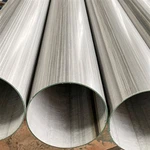
Monel Steel Plate
What is Monel Steel Plate
Monel® is an alloy of nickel and copper that was first developed for commercial use in 1905. It is mainly used for its excellent corrosion and temperature resistance and is especially valued for applications in the marine and chemical processing industries.
Benefits of Monel Steel Plate
Corrosion Resistance
Highly corrosion resistant to acids and alkalis, surpassing other common corrosion-resistant alloys like AISI 316 stainless steel.
Formability
Easy to form into a wide range of standard stock shapes like rods and pipes.
Weldability
Can be easily welded using standard welding techniques.
Temperature Resistance
Monel maintains its strength over a wide temperature range from sub-zero all the way to 480 °C.


Why Choose Us
Customer Service
We earn your respect by delivering on time and on budget. We built our reputation on exceptional customer service. Discover the difference it makes.
Expertise and Experience
Our team of experts have years of experience in delivering high quality services to our clients. We hire only the best professionals who have a proven track record of delivering exceptional results.
Quality Assurance
We have a rigorous quality assurance process in place to ensure that all our services meet the highest standards of quality. Our team of quality analysts checks each project thoroughly before it is delivered to the client.
State-of-the-art Technology
We use the latest technology and tools to deliver high quality services. Our team is well-versed in the latest trends and advancements in technology and uses them to provide the best results.
Competitive Pricing
We offer competitive pricing for our services without compromising on quality. Our prices are transparent, and we do not believe in hidden charges or fees.
Customer Satisfaction
We are committed to delivering high quality services that exceed our clients' expectations. We strive to ensure that our clients are satisfied with our services and work closely with them to ensure their needs are met.
What Are the Different Types of Monel
The three main Monel alloys, each of which has several variations, are listed below:
Monel 400
Monel has excellent resistance to attack by a number of corrosive agents, including seawater and strong acids - even hydrofluoric acid. It is a tough, high-strength alloy that can only be cold worked, not heat treated, for additional increases in strength. Monel 400 is machinable but presents some challenges. The alloy work hardens under the action of the cutting tool and requires close attention to feed and speed settings and tool wear.
Monel R-405
This alloy has the same composition as Monel 400 except for a small increase in the sulfur content (from 0.024 to 0.06 %). The additional sulfur gives R-405 better machinability than the 400 grade by creating nickel-copper sulfide inclusions in the material that act as chip breakers.
Monel K-500
This alloy is a high-strength variant of Monel with small amounts of aluminum and titanium added to the basic formula. It has all the advantages of standard Monel 400, but with increased hardness and strength from precipitation hardening heat treatments.

Monel is used in a wide range of applications that require high corrosion resistance and toughness. For that reason, it is often used in the marine and chemical processing industries for the following types of equipment:
● Propeller shafts
● Fasteners
● Heat exchangers
● Process vessels
● Valve stems
● Process piping
● Petroleum stills
● Pumps and valves
● Commercial screw machines
● Chains and cables
What Are the Chemical Components of the Monel Alloys
Monel alloys are approximately one-third copper (27 to 34%) and two-thirds nickel (63% min). Monel R-405 alloys have increased sulfur content, and Monel K-500 contains added aluminum and titanium, but very low sulfur. Table 1 below shows the chemical compositions of the various alloys:
Table 1: Monel Alloy Chemical Compositions
|
Element |
Monel 400 |
Monel R-405 |
Monel K-500 |
|
Nickel (wt %) |
63 min. |
63 min. |
63 min. |
|
Copper (wt %) |
28 - 34 |
28 - 34 |
27 - 33 |
|
Manganese (wt %t) |
2 max. |
2 max. |
1.5 max. |
|
Iron (wt %) |
2.5 max. |
2.5 max. |
2 max. |
|
Sulfur (wt %) |
0.024 max. |
0.025 to 0.060 |
0.01 max. |
|
Silicon (wt %) |
0.5 max. |
0.5 max. |
0.5 max. |
|
Aluminum (wt %) |
0 |
0 |
2.3 to 3.15 |
|
Titanium (wt %) |
0 |
0 |
0.35 to 0.85 |
What Are the Physical Properties of the Monel Alloys
Monel has a wide range of properties that make it a desirable material in a broad range of applications. The physical properties for the Monel alloys are listed in Table 2 below:
Table 2: Monel Alloy Physical Properties
|
Physical Properties |
Monel 400 |
Monel R-405 |
Monel K- 500 |
|
Density (g/cm3) |
8.8 |
8.8 |
8.44 |
|
Curie Temperature |
21 - 49 |
28 - 34 |
- |
|
Electrical Resistivity @ 100 C (Annealed) (µΩ.m) |
0.537 |
0.537 |
0.618 |
|
Thermal Linear Expansion @ 100 C (Annealed) (µm/m.°C) |
14.2 |
14.2 |
13.7 |
|
Thermal Conductivity @ 100 C (Annealed) (W/m.°C) |
24 |
24 |
19.4 |
|
Specific Heat @ 100 C (Annealed) (J/kg.°C) |
445 |
445 |
448 |
What Are the Mechanical Properties of the Monel Alloys
The Monel alloys have a wide range of mechanical properties which vary depending on the degree of hardening by cold working or precipitation hardening. The strength properties also differ depending on whether the material is supplied in the form of a plate, rod, or some other standard form. Table 3 below indicates the maximum strength properties of rod and bar stock for easy comparison of the various grades of Monel:
Table 3: Monel Alloy Mechanical Properties
|
Mechanical Properties |
Monel 400 |
Monel R-405 |
Monel K-500 |
|
Hardening Method |
Cold drawn & stress relieved |
As cold drawn |
Hot finished & aged |
|
Tensile Strength (MPa) |
579 to 827 |
586 to 793 |
695 to 1310 |
|
Yield Strength (0.2 % Offset) (MPa) |
379 to 690 |
345 to 724 |
690 to 1034 |
|
Elongation (%) |
22 to 40 |
15 to 35 |
20 to 30 |
|
Hardness (Rockwell) |
20 to 85 B |
23 to 85 B |
27 to 38 C |
What is the Melting Point of Monel
The melting point will depend on the specific Monel alloy composition. Table 4 below indicates the melting temperatures of the main alloys:
Table 4: Monel Alloy Melting Points
|
Monel 400 |
Monel R-405 |
Monel K-500 |
|
|
Melting Temp (°C) |
1300 to 1350 |
1300 to 1350 |
1315 - 1350 |
No, Monel is generally non-magnetic but can have useful magnetic properties under certain conditions. The Curie temperatures of Monel 400 and R-405 are close to ambient temperature, so they are not magnetic at higher temperatures. Furthermore, variations in composition even within the material specification tolerances can cause some lots to be magnetic, while others are not.
Monel K-500 is just different enough that it has a very low Curie temperature, is well below ambient, and can be considered to be reliably non-magnetic using normal material production methods. However, by selectively removing the aluminum and copper content from the surface of Monel K-500 through oxidation, a surface layer enriched with magnetic nickel can be formed. Wire and thin strip manufactured by this special process is used in electronic component applications.

Monel 400 and Monel K-500 are two distinct alloys that differ in their strengthening mechanisms and properties. Monel 400 achieves its strength through solid solution strengthening, where a solid solution of nickel and copper enhances its mechanical properties. In contrast, Monel K-500 gains its strength through precipitation hardening which involves the formation of precipitates within the alloy matrix. Furthermore, the addition of titanium and aluminum in Monel K-500 enables age hardening, a heat treatment process that further enhances its strength and hardness. This attribute makes Monel K-500 advantageous for specific applications that demand increased performance.
When it comes to overall performance, Monel K-500 tends to outperform Monel 400. The precipitation hardening mechanism in Monel K-500 makes it harder and stronger, so it's better for applications requiring high strength. Both alloys, however, exhibit excellent corrosion resistance, displaying resilience in the face of corrosive environments such as seawater, acids, alkalis, and salts.
Despite their similarities in corrosion resistance, Monel K-500 is more susceptible to stress corrosion cracking in certain environments due to its increased strength. This factor should be carefully considered when selecting between the two alloys.
Another significant difference between the two alloys is their magnetic properties. Monel 400 can be affected by magnetism in certain cases, while Monel K-500 remains non-magnetic in all circumstances.
What Are the Common Forms of Monel 400 Material
Monel is available in different forms to suit different manufacturing and fabrication requirements. The most common forms are listed below:
Sheet
Monel sheet stock is flat, thin, and flexible. It is strong, resists corrosion, and is easy to weld. This makes it suitable for sheet metal fabrication, cladding, roofing, chemical processing equipment, and marine applications.
Bar
Monel bars are solid cylindrical shapes with varying diameters and lengths. They exhibit high strength, good corrosion resistance, and are highly machinable. These bars are commonly used in shafts, fasteners, bolts, fittings, pump components, valve stems, and machine parts.
Plate
Plates of Monel are flat, rectangular, and available in different thicknesses and dimensions. They are strong, resist corrosion, and are formable into other shapes. Plates find use in structural components, pressure vessels, tanks, heat exchangers, and marine environments.
Hot Rolled
Hot rolled Monel is formed by the process of hot rolling at high temperatures. This treatment improves its strength and toughness, making it suitable for structural components, heat exchangers, piping systems, and marine applications.
Annealed
Some Monel undergoes an annealing process to relieve internal stresses and enhance ductility. That makes it more formable so it's easier to fabricate or machine. This form is commonly used in sheet metal fabrication, welded components, machined parts, and electrical connectors.
Cold Drawn
Cold drawn Monel is formed through cold drawing or cold working processes. It is stronger than the basic material and better maintains accurate dimensions. It is used for precision components, fasteners, springs, wire mesh, and electrical applications.
Maintenance Required for Monel Sheet
Although Monel sheet metal is much more corrosion-resistant than other metals, it still requires regular cleaning and periodic maintenance to keep it in top condition. Cleaning Monel is simple, mostly because the alloy resists various chemicals. The monel sheet should be cleaned frequently to avoid stains and discolouration. Avoid using harsh abrasives and acids while cleaning Monel because they can cause severe pitting on the surface.
Consider using a lubricant to avoid cracking and tearing when cutting or forming Monel. Welding should always be approached with care because of Monel's lower thermal conductivity and higher coefficient of thermal expansion than other metals. Preheating the material to avoid thermal shock during welding might help.
Other considerations for using Monel
Depending on the manufacturer, Monel can come in a variety of forms. Companies can purchase Monel in either hot-or cold-rolled sheets, strips, plates, tubes, rods, and bars. However, when it comes to machining, there are benefits to using shaped wire.
Manufacturers may also factor in aspects of application and environment when selecting which type of Monel to use. In addition to grade, there are different price points to consider. Moreover, certain grades of Monel are more likely to wear from galvanic corrosion.
What is the difference between Inconel 600 and Monel 400
Among the many corrosion-resistant alloys, Monel 400 and Inconel 600 are undoubtedly the two most well-known. They both have excellent corrosion resistance, but due to their different compositions, they exert their own advantages in different areas. This article will compare these two alloys in detail from 10 aspects to help you better understand their characteristics and applications.
1.Monel 400: Nickel-copper alloy, corrosion resistance mainly comes from copper. Copper has corrosion resistance at room temperature that most metals do not have, especially in flowing seawater. This corrosion resistance makes Monel 400 irreplaceable in marine applications. However, copper oxidizes easily at high temperatures, so Monel 400 is rarely used in high-temperature corrosion-resistant applications.
2.Inconel 600: Nickel-chromium-iron alloy, corrosion resistance mainly comes from chromium. Chromium itself can be oxidized, but after oxidation, chromium oxide will form a protective film on the surface of the alloy to isolate the oxide and the alloy, thus preventing further oxidation of the alloy. This antioxidant effect is also effective at high temperatures.
1. Monel 400: Mainly used in room temperature marine applications, such as ships, marine engineering, seawater treatment, etc.
2. Inconel 600: More used in high temperature applications, such as petrochemical, aerospace, nuclear energy and other fields.
1. Monel 400: Wire rod, wire rod, filler metal, welding rod, etc.
2. Inconel 600: Seamless pipes and pipes, welded pipes and pipes, capillary pipes, coiled pipes, thick-walled pipes, elbows, flanges, reducers, tees, pipe caps, round steel and bars, flat steel, square steel Steel, hexagonal steel, sheet, plate, coil, strip, wire rod, pole, filler metal, welding rod, etc.
1. Monel 400: ASTM B163, ASTM B165, ASTM B829, ASTM B725, ASTM B775, ASTM B730, ASTM B751, ASTM B366, ASTM B164, ASTM B564, ASTM B127, etc.
2. Inconel 600: ASTM B163, ASTM B167, ASTM B829, ASTM B517, ASTM B775, ASTM B516, ASTM B751, ASTM B366, ASTM B166, ASTM B564, ASTM B168, ASTM B906, etc.
The price difference between the two alloys is very small because they have different application areas and cannot be substituted for each other.
Overall, both Monel 400 and Inconel 600 are not very strong. But compared with copper, chromium has a more obvious solid solution strengthening effect. Therefore, the strength of Inconel 600 is higher than that of Monel 400, which also ensures the stability of Inconel 600 in high temperature environments.
1. The linear thermal expansion coefficient of Monel 400 is 13.9 x 10^-6/℃.
2. The linear thermal expansion coefficient of Inconel 600 is 13.3 x 10^-6/℃.
Therefore, in the same temperature range, the linear thermal expansion coefficient of Inconel 600 is slightly lower than that of Monel 400, which helps to reduce stress and thermal deformation.
1. Monel 400: Monel 400 can be heat treated to gain higher strength, but this will reduce its toughness and corrosion resistance. Therefore, Monel 400 is usually not heat treated.
2. Inconel 600: Inconel 600 can obtain different structures and properties through solution treatment and heat treatment. Solution treatment can improve its strength, and heat treatment can improve its corrosion resistance.
1. Monel 400: Monel 400 has good welding performance and can be used with various welding methods such as TIG, MIG, and arc welding.
2. Inconel 600: Inconel 600 has poor welding performance and is prone to cracks and deformation. Therefore, special welding processes and measures need to be taken, such as preheating, post-heat treatment, etc.
1. Monel 400: Monel 400 has excellent corrosion resistance in seawater, salt water and some organic acid and alkali solutions. However, Monel 400 has poor corrosion resistance in strong acid and oxidizing environments.
2. Inconel 600: Inconel 600 has a wide range of corrosion resistance, including in highly corrosive environments such as seawater, salt water, nitric acid, hydrofluoric acid, and chloride solutions. It also has excellent antioxidant properties and performs well in high-temperature oxidizing environments.
To sum up, Monel 400 and Inconel 600 are both excellent corrosion-resistant alloys with their own advantages and scope of application. The choice of alloy should be evaluated and selected based on the specific application environment and requirements.
Our Factory
Among them, industrial stainless steel pipes & tubes have very high quality and price advantages which meet the ASTM, ASME, ANSI standard, these steel pipes are widely used boiler, heat exchanger and condensator tubes, Chemical plant, petro-chemical plant, pulp paper mill, beverage plant, gas, steam, water transport system, sewage treatment, power plant, sewer works...etc.

FAQ
Q: What is Monel pipe used for?
Q: Is Monel stronger than steel?
Q: Is Monel 400 better than stainless steel?
Q: Why is Monel so expensive?
Q: Is Monel 400 expensive?
Q: Is Monel hard to weld?
Q: Are Inconel and Monel the same?
Q: Is Monel better than Inconel?
Q: What is a substitute for Monel?
Q: How can you tell the difference between stainless steel and Monel?
Q: Is Monel metal toxic?
Q: What is the difference between Monel 400 and Monel 405?
Q: What is the other name for Monel 400?
Q: What is the difference between Monel 400 and K Monel?
Q: Will a magnet stick to Monel?
Q: Can you weld Monel to steel?
Q: Is Monel hard to machine?
Q: How much does Monel cost?
Q: How do you identify Monel?
Q: What metals make up Monel?