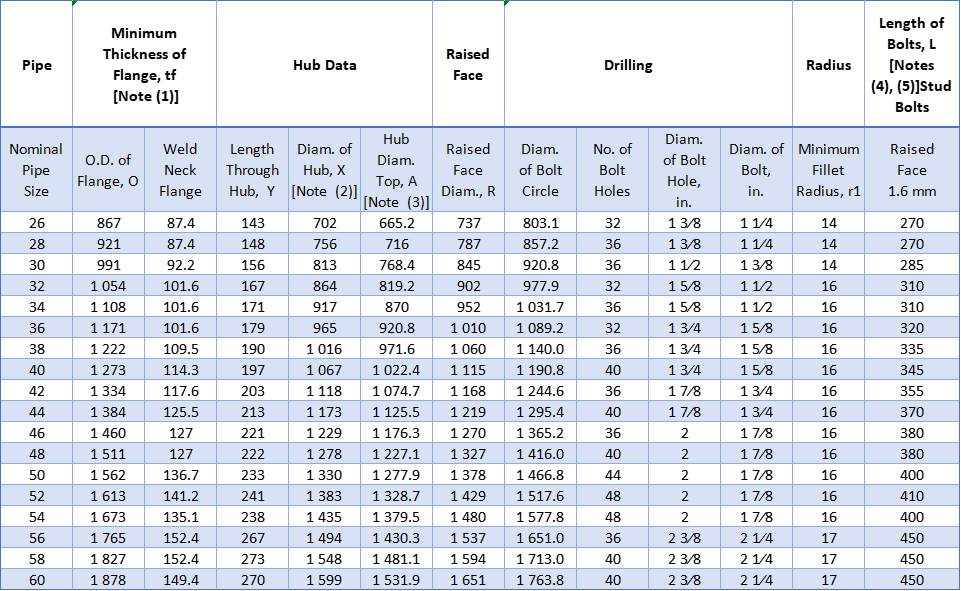
The ASME B16.47 Series B Class 300 Weld Neck Flange covers large-diameter steel flanges from NPS 26 through NPS 60. Within this standard, Series B outlines specifications inherited from the legacy API 605 standard. HT PIPE supply all different types and scales of flanges. Please feel free to contact us for further product information and pricing.
Series B vs. Series A: Key Structural Differences
When designing or procuring large-diameter connections, understanding how Series B deviates from Series A is crucial:
Bolting Geometry: Series B flanges utilize a greater number of smaller-diameter bolts compared to Series A. This layout yields a more compact bolt circle and distinct mechanical properties.
Profile and Mass: Series B flanges are generally thinner, narrower, and lighter than their Series A counterparts. This profile offers a more compact layout, making them a cost-effective option for tight spaces where weight reduction matters.
Interchangeability: It is critical to note that Series A and Series B flanges do not mate with one another. Their bolt circles, hole diameters, and thicknesses are entirely incompatible.
The Weld Neck (WN) Design Profile
The Weld Neck profile features a long, tapered hub that transitions smoothly from the flange ring thickness to the pipe wall thickness.
This geometry provides several advantages:
Stress Distribution: The tapered hub transfers structural stress directly into the pipeline, preventing stress concentrations at the base of the flange.
Fatigue Resistance: The butt-weld connection reduces turbulence and erosion inside the pipe, making WN flanges well-suited for high-vibration and cyclic-thermal systems.
Integrity Under Pressure: Rated at Class 300, these components provide reliable sealing performance across gas transmission lines, heavy refining units, and water treatment infrastructure.

ASME B16.47 Series B Class 300 Weld Neck Flange Dimensions