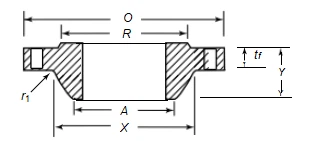
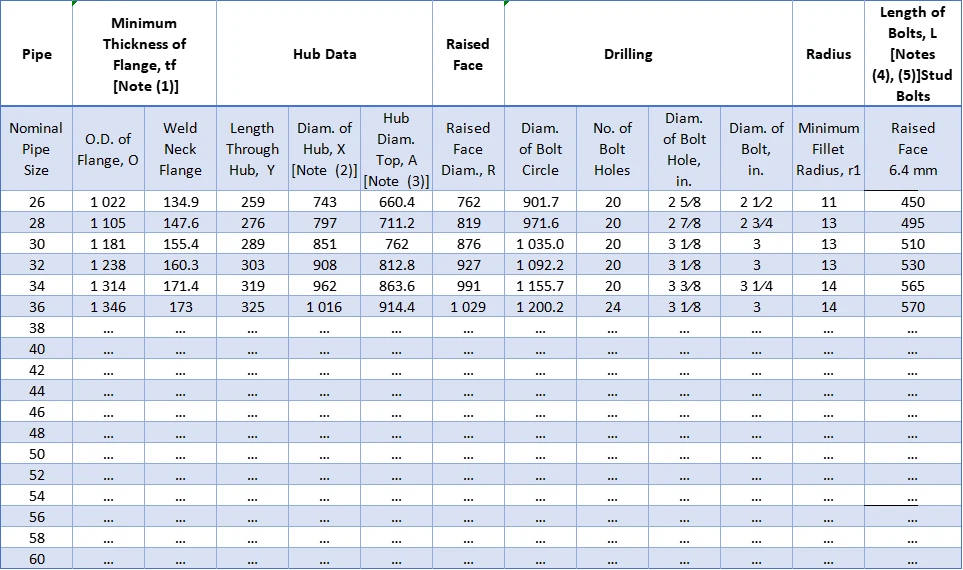
ASME B16.47 Series B (historically originating from API 605) outlines the exact metrics required for high-pressure, large-diameter applications. HT PIPE supply all different types and scales of flanges. Please feel free to contact us for further product information and pricing.
Why Series B Instead of Series A?
Before diving into the dimensional data, an engineer must establish why they are selecting a Series B flange over a Series A variant.
ASME B16.47 Series A (derived from MSS SP-44) features thicker, heavier, and physically larger flanges. They utilize fewer but substantially larger bolts. They are typically favored for high external piping loads and structural stress points.
ASME B16.47 Series B (derived from API 605) optimizes for compact design efficiency. It features a thinner profile, a smaller overall bolt circle diameter, and uses a higher quantity of smaller-diameter bolts.
Applications Across Key Industrial Sectors
High-pressure, large-bore piping networks are the lifelines of modern industrial processing. You will typically find the ASME B16.47 Class 900 Series B weld neck flanges integrated within:
Subsea and Land-Based Custody Transfer: Major oil and natural gas transmission lines crossing state lines require Class 900 integrity to push high volumes over vast distances safely.
Hydrogen and Petrochemical Synthesis: As deep-conversion refineries upgrade process units for cleaner fuel standards, high-pressure hydrogen loops demand robust forged steel flanges with zero-tolerance sealing faces.
Carbon Capture and Sequestration (CCS): Transporting supercritical fluids requires maintaining elevated pressure gradients, making Class 900 components an industry standard for newly fabricated carbon pipelines.
ASME B16.47 Series B Class 900 Weld Neck Flange Dimensions