


Welding al6xn to 316L Key Considerations:
-
Material Properties
AL6XN stainless steel: A superaustenitic stainless steel known for its high nitrogen content and excellent resistance to pitting, crevice corrosion, and stress corrosion cracking. It is often used in environments with harsh chemicals, seawater, and high temperatures.
316L stainless steel: An austenitic stainless steel with good corrosion resistance and mechanical properties, suitable for marine environments and chemical processing applications.
Thermal Expansion
These alloys have different thermal expansion coefficients, which can lead to residual stresses and potential cracking if not properly managed.
Corrosion Resistance
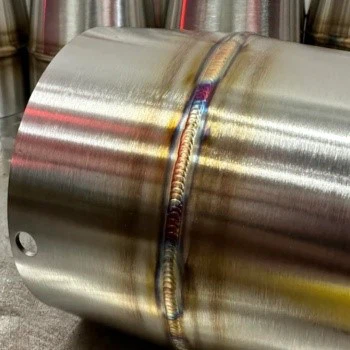
Mixing two different grades of stainless steel can sometimes compromise the overall corrosion resistance. It's crucial to ensure that the weld zone maintains the desired resistance properties.
-
Welding Methods
Gas Tungsten Arc Welding (GTAW/TIG)
GTAW is highly recommended due to its precision and control over heat input. This method is ideal for preventing excessive heat, which can lead to distortion and degradation of mechanical properties.
Shielded Metal Arc Welding (SMAW)
SMAW can be used, particularly for field repairs or when welding thicker sections. However, it requires more skill to manage the heat input and ensure a defect-free weld.
Gas Metal Arc Welding (GMAW/MIG)
GMAW is suitable for welding these materials, especially in applications requiring higher deposition rates. The use of a pulsed current can help control the heat input and reduce the risk of warping.
-
Welding Materials
Filler Metals
Selecting the appropriate filler metal is crucial for achieving a strong, corrosion-resistant weld. Recommended filler metals include:
ERNiCrMo-3 (Inconel 625): Provides excellent corrosion resistance and is compatible with both AL6XN welding and 316L.
ER316L: Suitable for less demanding applications, ensuring good compatibility with 316L while providing adequate corrosion resistance.
Shielding Gas
Use high-purity argon or a mixture of argon with helium to ensure a clean weld pool and minimize oxidation.
-
Heat Management
Interpass Temperature Control: Maintain a low interpass temperature (below 150°C) to prevent excessive heat build-up.
Post-Weld Heat Treatment (PWHT): While not always necessary, PWHT can relieve residual stresses and enhance corrosion resistance in critical applications.
-
Welding Parameters
Current and Voltage: Optimize these parameters based on the thickness of the materials and the chosen welding process to achieve good penetration and minimize defects.
Travel Speed: Adjust the travel speed to ensure consistent heat input and avoid overheating or underheating the weld zone.
-
Post-Weld Considerations
Inspection
Perform thorough inspections, including visual inspection, radiographic testing, and dye penetrant testing, to identify any defects such as cracks, porosity, or incomplete fusion.
Passivation
After welding, consider passivating the weld area to restore the corrosion-resistant layer on the stainless steel surface, enhancing its durability in corrosive environments.


