


Ask a plant engineer to name the workhorse nickel alloys and the list is predictable: 625 for everything, C276 for the worst acids, 718 for strength. Almost nobody names 825 - and that is exactly why it is the better buy in most chemical and marine services. Incoloy 825 is a nickel-iron-chromium solid-solution alloy with molybdenum, copper and titanium additions, engineered as a broad-spectrum corrosion fighter rather than a specialist.
It costs far less than 625 or the Hastelloy grades, welds without precipitation-hardening complications, and covers an unusually wide territory: sulphuric and phosphoric acids, seawater, chlorides, reducing and oxidising media, even mildly sour oilfield service.
This article covers the grade completely - the chemistry and what each element buys, the mechanical envelope, the corrosion map, the standard family, welding, applications, and the purchase-order notes that separate a good 825 order from an expensive mistake.
Product Forms
Bar & Rod
Plate & Sheet
Coil & Strip
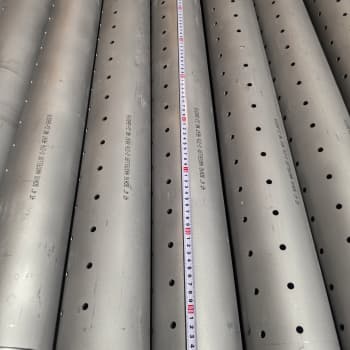
Pipe & Tube
Fitting: Flange, Tee, Elbow, Reducer etc.
Forging: Ring, Shaft, Circle, Block etc.
Where 825 sits in the Incoloy family
The Incoloy name marks the nickel-iron-chromium branch of the family (as opposed to Inconel, where nickel dominates). Alloy 800 is the economical high-temperature member; 800H and 800HT add creep strength for hot structural service; and 825 is the corrosion specialist - same family, different job.
Where the 800 series resists heat, 825 resists chemistry: its molybdenum and copper additions are there for acids and chlorides, and its titanium locks up carbon the way niobium does in 347H. The result is a single alloy that behaves like a corrosion-resistant stainless on one shift and a nickel alloy on the next.
Chemistry: every element with a job
| Element | Range (wt %) | What it buys |
| Nickel | 38.0 - 46.0 | The matrix - resistance to chloride stress-corrosion cracking and caustic media |
| Iron | 22.0 min (balance) | Cost reduction and the Incoloy identity |
| Chromium | 19.5 - 23.5 | Oxidising-acid resistance and the passive film |
| Molybdenum | 2.5 - 3.5 | Pitting and crevice resistance in chlorides |
| Copper | 1.5 - 3.0 | Resistance to reducing acids - sulphuric and phosphoric |
| Titanium | 0.6 - 1.2 | Stabilizes carbon (like niobium in 347) - protects grain boundaries in welded service |
| Carbon | 0.05 max | Kept low; the titanium handles what remains |
| Aluminium | 0.2 max | Deoxidation |
The combination that defines 825 is nickel plus molybdenum plus copper. Nickel gives the chloride immunity and the caustic resistance; molybdenum gives the localized-corrosion margin; copper is the element that lets 825 stand up to dilute sulphuric and phosphoric acid, which the straight chromium-nickel grades cannot. No other common alloy covers that same triangle at the same price.
Mechanical properties (annealed)
| Property | Minimum | Notes |
| Tensile strength | 586 MPa (85 ksi) | Annealed condition, per B423/B163 |
| Yield strength 0.2% | 241 MPa (35 ksi) | Annealed condition |
| Elongation | 30% | Ductile and formable |
| Hardness | 90 HRB max | Typical annealed range |
The mechanical numbers are modest next to 625 or the precipitation-hardening grades - 825 is not a strength alloy, and nobody should buy it for that. Its design value is corrosion resistance with fabricability: it forms, welds and machines like a stainless, which is exactly why chemical plant keeps choosing it over stronger, more difficult alloys.
The corrosion map: where 825 wins
| Environment | 825 performance | Compared to |
| Sulphuric acid (dilute to moderate) | Excellent, especially with aeration | Far better than 316L; copper is the key |
| Phosphoric acid | Excellent | The classic 825 service - fertilizer plant |
| Seawater and chloride service | Good - pitting and SCC resistant | Better than 316L and 904L in many conditions |
| Nitric and oxidising acids | Good | Chromium carries the load |
| Reducing media and mixed acids | Good | Nickel and copper work together |
| Caustic service | Good | Nickel content resists caustic cracking |
| Hydrochloric acid (hot, concentrated) | Limited | This is C276 territory - know the boundary |
The boundary that matters in procurement: 825 is a broad-spectrum alloy, not an acid-proof one. Hot concentrated hydrochloric acid, extreme chlorides at temperature, or the most aggressive wet-corrosion services will defeat it - those are the jobs for the Hastelloy C family. Specifying 825 where the duty is truly C276-grade over-buys; the reverse under-buys. The corrosion data sheet and the service history decide which side of the line the duty sits on.
Temperature and high-temperature behaviour
- Usable in service from cryogenic to about 540°C in corrosion duty, with higher limits for short exposure where oxidation is the only concern
- The titanium stabilization keeps the welded structure resistant to intergranular attack in the 425-870°C sensitization range
- Creep strength is limited compared to the 800H/800HT grades - for hot load-bearing service, not corrosion service, pick the H grades instead
The standard family
| Form | Standard | Notes |
| Seamless pipe / tube | ASTM B423 | The pipe standard for UNS N08825 |
| Condenser / heat-exchanger tube | ASTM B163 | Small-diameter tube service |
| Bar / rod | ASTM B425 | Machined components |
| Plate / sheet / strip | ASTM B424 | Vessel lining, fabricated equipment |
| Forgings | ASTM B564 | Flanges and fittings |
The European designation is 2.4858 (NiCr21Mo); the common trade name is Incoloy 825, and the universal UNS number is N08825. For oilfield service, 825 is accepted under NACE MR0175 for sour environments within the stated limits - worth confirming on the certificate when the order is for downhole or wellhead duty.
Welding: the fabricator's friend
- Weld with over-alloyed nickel filler - typically ERNiCrMo-3 (625-type) or ERNiCrMo-4 for the most corrosive duties
- No preheat and no mandatory post-weld heat treatment - the titanium stabilization protects the heat-affected zone
- Control heat input and interpass temperature as with any corrosion-critical nickel weld, and purge the root for tube duty
- Pickle or mechanically clean weld zones in chloride service to restore the passive surface
Welding 825 with a 316-type filler is the classic cost-cutting mistake: the weld metal becomes the weak point in the acid the pipe was bought to resist. The filler premium is small next to the failure it prevents.
Where 825 earns its keep
- Fertilizer and phosphoric-acid plant - tanks, piping, heat-exchanger tubes
- Sulphuric-acid service (dilute and moderate) - pickling lines, acid regeneration, chemical dosing
- Seawater cooling systems and offshore piping where 316L pits and 625 is over-specified
- Pollution-control and flue-gas desulphurization equipment
- Oil and gas production - tubing and piping in mildly sour, chloride-bearing service (NACE MR0175)
- Nuclear fuel reprocessing and radioactive-waste handling, where the corrosion map is a specification
Buying notes that protect the order
- Name the standard and grade: ASTM B423 / UNS N08825, and the product form (seamless pipe, tube, plate)
- Specify the condition - annealed, with the solution-anneal temperature on the certificate
- For sour service, confirm NACE MR0175 compliance and the hardness limit
- Request the heat number, full chemistry and mechanical results (EN 10204 3.1 or equivalent)
- Ask the supplier for the corrosion boundary - if the duty sits on the hot-concentrated-acid side, the honest answer may be C276, and a good supplier says so before the order
Incoloy 825 is the alloy that does not ask for attention: it welds easily, costs a fraction of the premium nickel grades, and quietly outlives the stainless alternatives in the broad middle of chemical and marine service. The engineer who knows the corrosion map - where it wins, and where the C family takes over - buys 825 with confidence and reserves the specialists for the duties they were made for.
FAQ
Q: Is Incoloy 825 the same as Alloy 800?
A: No. Both are nickel-iron-chromium alloys, but 800 is a high-temperature grade without the molybdenum, copper and titanium additions, while 825 is the corrosion specialist with sulphuric-acid and chloride resistance the 800 series does not have.
Q: Can 825 replace 316L stainless?
A: In many services, yes - 825 is the upgrade path when 316L pits or cracks in chlorides or suffers acid attack. It costs more, but the failure it prevents usually costs more still.
Q: Does 825 need post-weld heat treatment?
A: No. The titanium stabilization protects the weld heat-affected zone from sensitization, so 825 welds with no preheat and no mandatory PWHT for most services.
Q: Where does 825 stop being the right answer?
A: Hot concentrated hydrochloric acid and the most aggressive wet-corrosion services defeat it - those are the duties for the Hastelloy C family. 825 is broad-spectrum, not acid-proof.
Q: What filler is used to weld 825?
A: Over-alloyed nickel filler, typically ERNiCrMo-3 (625-type). Welding 825 with stainless filler creates a weak weld zone in exactly the acid service the pipe was specified for.


