


Monel 400 and monel k500 material supplier. Contact us to get free quote and sample!
Monel 400 is a typical solid-solution-strengthened alloy, relying on lattice distortion between nickel and copper atoms to enhance its strength. Monel K-500, on the other hand, is a precipitation-strengthened alloy, achieving strength through the precipitation of γ' phase (Ni₃(Al,Ti)).
Monel 400 and monel k500 material supplier
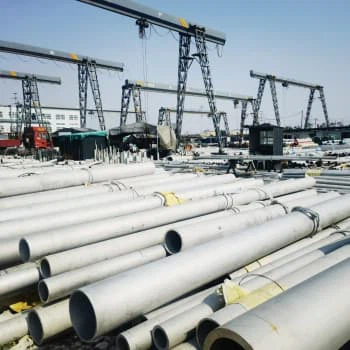
HT PIPE is a leading stockist and global exporter with over 15 years of expertise in international trade. We supply monel k500 pipes, asme sb127 alloy 400 plates, round bars, and a comprehensive range of pipe fittings, flanges, and valves. Contact us now for free quotes and personalized product information.
2.4375 vs 2.4360 Corrosion Resistance
K-500 Limitations: While K-500 exhibits comparable corrosion resistance to 400 in static testing, its precipitated phase may induce microgalvanic corrosion in high-stress coupled corrosion environments, resulting in slightly lower stress corrosion resistance than 400. This characteristic is particularly pronounced in sulfur-containing media (such as sour oil and gas).
400 Weaknesses: Monel 400 may exhibit intergranular corrosion in strongly oxidizing media (such as concentrated nitric acid) and high-temperature ammonia environments. K-500's resistance to such environments is slightly improved due to the addition of aluminum and titanium.
Monel 400 and alloy k500 Core Chemical Composition Comparison (wt%)
| Element | Monel 400 | Monel K-500 |
|---|---|---|
| Nickel (Ni) | ≥63.0% | ≥63.0% |
| Copper (Cu) | 28.0-34.0% | 27.0-33.0% |
| Iron (Fe) | ≤2.5% | ≤2.0% |
| Manganese (Mn) | ≤2.0% | ≤1.5% |
| Aluminum (Al) | - | 2.3-3.15% |
| Titanium (Ti) | - | 0.3-1.00% |
| Carbon (C) | ≤0.30% | ≤0.25% |
alloy 400 and monel k500 Mechanical Properties Comparison (Room Temperature)
| Property | Monel 400 | Monel K-500 |
|---|---|---|
| Tensile Strength (MPa) | 550-760 | 965-1200 |
| Yield Strength (MPa) | 240-310 | 650-825 |
| Elongation (%) | 35-45 | 15-25 |
| Brinell Hardness (HB) | 135-180 | 230-290 |
| Fatigue Strength (MPa) | 230-290 | 260-560 |
| Shear Strength (MPa) | 370-490 | 430-700 |
alloy n04400 and alloy n05500 Forming
Monel 400: Excellent hot and cold workability, suitable for complex forming processes such as deep drawing and spinning, with a moderate work hardening rate (n value approximately 0.3).
Monel K-500: Has a narrow hot working temperature range (870-1175°C), a high work hardening rate during cold working (n value ≈ 0.45), and requires interpass annealing (705-925°C), resulting in a tighter process window.
monel 400 material and monel k500 material Welding Performance
Monel 400: TIG/MIG welding requires strict heat input control. ERNiCu-7 welding consumables are recommended. Post-weld corrosion resistance may decrease by 10-20%.
Monel K-500: Has better welding performance than 400, but requires a special aging treatment (590-620°C x 8h + 480-520°C x 12h) to restore the heat-affected zone. Post-weld strength retention can reach over 95%.
uns n04400 and uns n05500 Heat Treatment
Monel 400: Generally used in the annealed state (705-925°C), requiring no complex heat treatment.
Monel K-500: Achieving target properties requires a two-stage aging treatment, requiring strict process control (±10°C temperature control accuracy).
alloy n04400 and alloy n05500 Physical and Thermal Properties
Thermal Stability: Monel 400 maintains good structural stability below 600°C. Due to the coarsening of the precipitated phase, the upper limit of long-term operating temperature for K-500 is reduced to 480°C.
Thermal Expansion Coefficient: Monel 400 and K-500 are 13.5×10⁻⁶/°C and 14.2×10⁻⁶/°C (20-300°C), respectively. Both are lower than austenitic stainless steel (≈18×10⁻⁶/°C), making them suitable for composite applications with carbon steel substrates.
Special Properties: Monel 400's Curie temperature (70-120°C) is significantly higher than K-500's (-67°C), offering unique advantages in electromagnetic equipment applications.
FAQ
Q1: Seamless vs. Welded Pipe: Which do I need?
Seamless: Extruded from a solid billet. No weld seam means zero risk of line defects. Best for extreme high pressure and critical hazardous lines.
Welded: Rolled from plate and automatically welded. More cost-effective with shorter lead times, ideal for large-diameter distribution lines.
Q2: Why choose Monel over Stainless Steel in marine settings?
Stainless steel (like 316L) pits and cracks in stagnant seawater.
Monel 400 is virtually immune to chloride-ion stress corrosion cracking (SCC) and handles high-velocity brackish water without degrading.
Q3: Can Inconel 600 handle high-temperature sulfur?
No. While it handles oxidation up to 2000°F (1093°C), its high nickel content (72% min) makes it vulnerable to sulfidation in reducing sulfur environments. Use a high-chromium grade like Inconel 601 instead.
Q4: Monel 400 vs. Monel K500: What is the main difference?
Monel 400: Excellent ductility and easily formed; used for standard corrosion-resistant piping.
Monel K500: Age-hardened with aluminum and titanium. It offers triple the yield strength of 400, making it ideal for high-stress parts like pump shafts and fasteners.
Q5: What does an EN 10204 3.1 MTR guarantee?
It is an official factory certification proving full heat-number traceability. It verifies the exact chemical composition, mechanical properties (tensile, yield, hardness), and NDT test results for your specific batch.


