


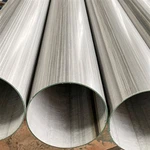

C276 Plate
1. Standard: ASTM B575, ASME SB 575
2. Width: 0~2500mm or as per your requirements
3. Length: 0~12m or as per your requirements
4. Thickness: 0.3~ 50mm or as per your requirements
When a chemical plant engineer writes "C276 plate" on a requisition, they mean one thing: a nickel-chromium-molybdenum plate that keeps working in services where 316L, 904L and even super-duplex have already been replaced. This page is the complete single-product reference for Hastelloy C276 plate - the chemistry that does the work, the mechanical numbers, the stock sizes and tolerances you can actually order, how to weld and cut it, when clad plate beats solid plate, and what it costs in 2026. One alloy, from chemistry to purchase order.
Product Forms
Bar & Rod
Plate & Sheet
Coil & Strip
Pipe & Tube
Fitting: Flange, Tee, Elbow, Reducer etc.
Forging: Ring, Shaft, Circle, Block etc.

1. What Hastelloy C276 Plate Actually Is (the chemistry that earns its keep)
Hastelloy C276 is a nickel-chromium-molybdenum-tungsten alloy registered as UNS N10276, Werkstoffnummer 2.4819, EN NiMo16Cr15W, and sold under the Haynes trademark "Hastelloy C276" or simply Alloy C276. It is the workhorse of the Ni-Cr-Mo plate family - not the most exotic, but the most proven for aggressive wet chemistry.
| Element | Alloy C276 (UNS N10276), % by weight |
|---|---|
| Nickel | balance (approx. 57 min) |
| Chromium | 14.5 – 16.5 |
| Molybdenum | 15.0 – 17.0 |
| Tungsten | 3.0 – 4.5 |
| Iron | 4.0 – 7.0 |
| Carbon | 0.010 max |
| Silicon | 0.08 max |
| Manganese | 1.0 max |
| Cobalt | 2.5 max |
| Vanadium | 0.35 max |
| PREN (calculated) | ~ 68 |
Three chemistry facts decide where C276 plate is used:
Molybdenum at 15–17% is the reducing-acid engine. Mo is the element that carries resistance to hydrochloric acid, dilute-to-intermediate sulfuric acid and other non-oxidizing acids. At 16% Mo plus 3–4.5% tungsten, C276 handles hot HCl and wet chlorine service that chromium-only stainless steels cannot touch.
Tungsten works with molybdenum. W adds solid-solution strength and pushes localized corrosion resistance further in chloride media. Together, Mo + W give C276 a PREN around 68 - well above any stainless or 6% Mo austenitic grade.
Ultra-low carbon (0.010% max) makes it weldable as-delivered. C276 was the first wrought Ni-Cr-Mo alloy designed so that grain-boundary chromium carbides do not form during welding. That is why C276 plate is used as-welded with no post-weld heat treatment in most chemical service - PWHT would actually sensitize the HAZ and hurt corrosion resistance.
2. Mechanical Properties and ASME Allowable Stress
C276 plate is supplied in the solution-annealed condition to ASTM B575 / ASME SB-575 (sheet, plate and strip). Typical mechanical values for 6–50 mm plate:
| Property (Annealed) | ASTM B575 Requirement | Typical Value |
|---|---|---|
| Tensile strength (Rm) | ≥ 690 MPa | 730 – 800 MPa |
| Yield strength (Rp0.2) | ≥ 283 MPa | 340 – 420 MPa |
| Elongation (A5) | ≥ 40% | 45 – 60% |
| Hardness | ≤ 100 HRB | ~ 90 HRB |
| Density | 8.89 g/cm³ | - |
| Melting range | 1325 – 1370 °C | - |
| Modulus of elasticity (RT) | ~ 205 GPa | - |
| Thermal expansion (20–100 °C) | ~ 11.2 µm/m·°C | - |
For pressure vessels, C276 plate is approved under ASME Section VIII Division 1 and Section I. Indicative allowable stresses for SB-575 plate:
| Temperature (°C) | Allowable Stress (MPa) |
|---|---|
| 40 | 195 |
| 200 | 165 |
| 400 | 140 |
| 600 | 120 |
| 700 | 100 |
| 800 | 85 |
| 900 | 65 |
The practical read: C276 is a corrosion alloy, not a high-temperature creep alloy. Its allowable stress holds comfortably through 400–600 °C, which covers FGD absorber service, phosphoric acid evaporators and most wet chemical process. Do not spec C276 plate for load-bearing parts above ~650 °C - its strength drops faster than chromium- and niobium-strengthened nickel alloys designed for high temperature.
3. Plate Sizes, Tolerances and Supply Forms You Can Actually Order
This is the part generic datasheets skip. When you order C276 plate, the commercial forms are:
| Supply Form | Thickness Range | Typical Width × Length | Note |
|---|---|---|---|
| Cold-rolled sheet / plate (2B, 2D or bright annealed) | 0.5 – 6.0 mm | 1000 × 2000 / 1219 × 2438 / 1500 × 3000 | Small vessels, linings, ducting |
| Hot-rolled annealed & pickled plate (No.1) | 6.0 – 50 mm | 1500 × 6000 / 2000 × 6000 | Standard FGD / reactor shell stock |
| Heavy plate | 50 – 80 mm (and above via forging route) | up to 2500 wide | Tube sheets, flanges, thick shells |
| Cut-to-size plate | any of the above | laser / plasma / waterjet profiles | Fabricator-ready blanks |
| C276-clad plate (on carbon steel) | 3 – 6 mm clad + 20 – 80 mm base | large format | See Section 6 |
Tolerances follow ASTM A480 (thickness, width, length, flatness, camber). Thickness tolerance tightens with width; always confirm the A480 tolerance table for your ordered width when the plate is destined for rolling into a shell.
Standard reference: ASTM B575 / ASME SB-575 for US-code projects; EN 10028-7 with VdTÜV-Werkstoffblatt 502 (W.Nr. 2.4819) is the cross-reference European inspectors ask for on PED / AD 2000 jobs. Both chemistries are the same alloy - the documentation package differs.
4. Where C276 Plate Earns Its Keep (application by application)
C276 plate is bought for a short list of aggressive services. If your medium is on this table, C276 is the conservative industry answer:
| Application | Why C276 Plate Is Specified | Typical Thickness Used |
|---|---|---|
| Wet FGD absorber inlet zone (Cl⁻ 30,000–50,000 ppm, 60–80 °C, pH 2–4, limestone slurry) | Mo + W resist the reducing, chloride-loaded slurry; the ultra-low C keeps welded seams immune | 10 – 20 mm solid, or 4 – 5 mm clad on CS shell |
| Wet-process phosphoric acid evaporator (H₃PO₄ 30–50% with HF / SiF₆, 100–150 °C) | One of the few alloys qualified for fluoride-bearing phosphoric acid at temperature | 16 – 25 mm shell plate |
| Wet chlorine handling (Cl₂ + water, ambient to 60 °C) | Industry-standard material for chlorine dioxide and wet Cl₂ service | 6 – 16 mm |
| Hydrochloric acid storage / scrubber (HCl 10–36%, 30–80 °C) | Mo + W dominate HCl across the whole concentration band at these temperatures | 10 – 20 mm |
| Sulfuric acid coolers and dilution vessels (H₂SO₄ 50–98%, 60–120 °C) | Mo carries reducing H₂SO₄; the low-Si + low-C balance avoids preferential attack | 12 – 25 mm |
| Reactor shells with organic chloride catalysts (pharma / fine chemical, 50–150 °C) | Conservative choice for mixed organic + chloride where stainless pitting recurs | 8 – 16 mm |
| Seawater / brine heat-exchanger tube sheets and partition plates | When 6-Mo stainless shows crevice attack, C276 plate is the standard upgrade | 30 – 60 mm tube sheets |
A note for German and Benelux chemical projects: for FGD absorbers and acid concentrators in the Ludwigshafen / Chemiepark Marl / INEOS Köln belt, C276 plate to ASTM B575 is routinely supplied with VdTÜV 502 documentation and EN 10028-7 cross-reference so the TÜV inspector accepts it under PED 2014/68/EU and AD 2000. Ask for that documentation package up front - retrofitting it later costs weeks.
5. Welding and Fabrication - the Rules That Keep C276 Plate Corrosion-Resistant
C276 plate is weldable by all standard processes, but three rules decide whether the weld keeps the alloy's corrosion resistance:
Rule 1 - filler metal. Use ERNiCrMo-4 (AWS A5.14) / EN ISO 18274 matching filler for C276-to-C276. For dissimilar joints to carbon steel or stainless, a nickel-base transition filler is standard practice; the WPS must state the filler and the corrosion test that validates it.
Rule 2 - heat control. No preheat. Keep interpass temperature ≤ 95 °C and heat input in the 0.5 – 1.5 kJ/mm band. On thick plate (above 25 mm) multi-pass welds retain heat, so water-cooling between passes or timed welder rotation may be needed to stay under the interpass cap.
Rule 3 - no PWHT. C276 is designed to be used as-welded. Post-weld heat treatment sensitizes the HAZ and destroys corrosion resistance. If code or the owner demands a stress relief, push back - it is wrong for C276.
| Fabrication Step | Recommended Practice |
|---|---|
| GTAW / GMAW filler | ERNiCrMo-4 (EN ISO 18274) |
| SMAW electrode | ENiCrMo-4 |
| Preheat | None |
| Interpass temperature | ≤ 95 °C |
| Heat input | 0.5 – 1.5 kJ/mm |
| PWHT | Not required - do not perform |
| Corrosion test on weld coupon | ASTM G28 Method A (critical acceptance for C276) |
| Hot forming | 1090 – 1230 °C, then re-anneal + quench |
| Cold forming | High work-hardening rate; allow for springback, anneal after severe deformation |
| Cutting | Plasma or waterjet; no oxy-fuel (Cr-Mo scale does not cut cleanly) |
6. Solid Plate or C276-Clad Plate? The Large-Shell Economics
For vessels above roughly 4 m diameter - FGD absorbers, phosphoric acid reactors, large acid storage tanks - a solid C276 shell is cost-prohibitive. A single solid C276 shell can exceed €500,000 in material alone. The standard answer is C276-clad plate: a 3–6 mm C276 layer metallurgically bonded (explosion or roll bonding) to a carbon steel base, supplied to ASTM B898. Indicative 2026 levels:
| Clad Configuration | Typical Application | Indicative Price (per kg) |
|---|---|---|
| 3 mm C276 clad + 30 mm carbon steel base | FGD absorber shell, acid storage | 18–18–28 |
| 5 mm C276 clad + 50 mm carbon steel base | Large reactor shell, phosphoric acid | 20–20–32 |
| Solid C276 plate (6–50 mm, hot rolled) | Small diameters, critical chemistry, tube sheets | 32–32–48 |
The clad plate gives the wetted side full C276 corrosion resistance at 30–60% lower material cost than solid plate, and the carbon steel base carries the pressure load. For German Ruhr-area FGD retrofits with VdTÜV / AD 2000 documentation, clad plate with EN 10028-7 base reference is the configuration TÜV inspectors see most often. Note the lead time: C276-clad is a special order at 8–14 weeks, so plan it into the project schedule rather than treating it as stock.
7. What C276 Plate Costs in 2026 - and What Drives It
C276 plate price tracks molybdenum far more than nickel. With roughly 16% Mo in the alloy and molybdenum spot prices still volatile, every 1% Mo translates to roughly $0.50/kg of plate price. Indicative ex-works China levels for 6–50 mm plate:
| Plate | Indicative Price (per kg, ex-works China) | Note |
|---|---|---|
| C276 plate, hot rolled, ASTM B575 | 32–32–48 | Tracks Mo; the wide end is heavy gauge + wide format |
| C276 plate with EN 10204 3.1 + VdTÜV 502 cross-ref | 34–34–52 | European documentation package |
| C276-clad plate on CS base | 18–18–28 | Most economical for large shells |
For bulk orders, ask for a quote tied to current LME Ni + Mo pricing with 30-day price validity. For 6–12 month projects, negotiate a price-escalation clause based on the LME Ni / Mo / Cr indices so the mill quote does not go stale before the steel is melted.
8. What to Put on the Purchase Order
Keep the PO specification tight - five fields decide everything downstream:
Alloy + standard: Alloy C276 (UNS N10276) to ASTM B575 / ASME SB-575, or EN 10028-7 + VdTÜV 502 for European code jobs.
Dimensions: thickness × width × length, quantity in pieces, and whether you accept mill tolerances per ASTM A480.
Supply form: hot-rolled annealed & pickled (No.1), cold-rolled (2B), or cut-to-size profiles with edge condition.
Surface: pickled / blasted / polished as required for the lining or shell application.
Documentation: EN 10204 3.1 (or 3.2 with third-party inspection) with full chemistry and mechanicals.
FAQ
Q: About Alloy 800 tube price per kg?
A: Prices ranges from $25 to $40 per kg, vary depending on size, wall thickness, supplier etc.
Q: How long does your delivery time take?
A: Delivery time is within 5-21 days
Q: Is There Sample Service?
A: Samples Are Provided Free Of Charge
Q: What Is The Minimum Order Quantity?
A: No Minimum Order Quantity
Q: How to pack the products?
A: The inner layer has a waterproof paper outer layer and is fixed with a fumigation wooden pallet.
Q: Exported Countries
A: Brazil, South Africa, Indonesia, India, Singapore, Malaysia, Iran, Russia, UAE, Chile, Laos, etc
Hot Tags: Hastelloy C276 plate, Alloy C276 plate, UNS N10276 plate, ASTM B575 plate, C276 plate FGD absorber shell, 2.4819 plate
Previous
Alloy C22 PlateYou Might Also Like


Send Inquiry