


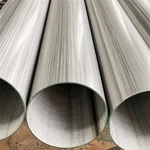
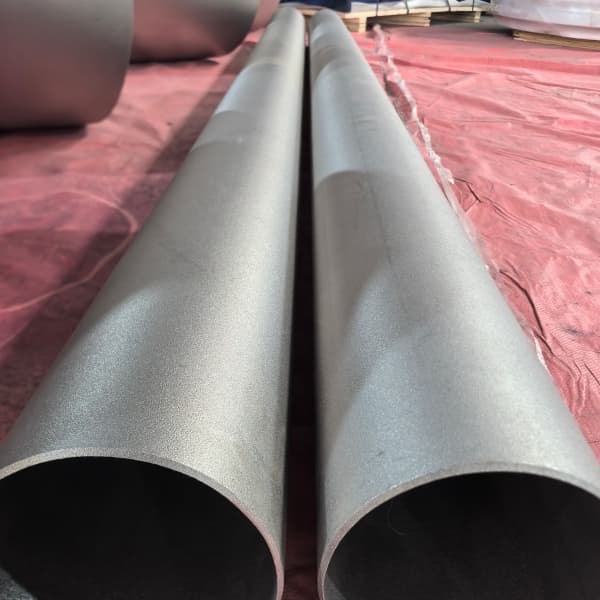
ASTM A312 TP321 Stabilized Austenitic Pipe
1. Standard: ASTM A312 / ASME SA312、ASTM A213/ASME SA213、ASTM A269/ASME SA269
2. Size: 6mm-830mm
3. Thickness: 0.5mm-30mm
4. Equivalent:UNS S32100, WNR.1.4541, AISI 321
ASTM A312 TP321 Stabilized Austenitic Pipe exists to solve one specific problem: intergranular corrosion in welded, heated austenitic stainless steel. While 304 and 316L risk losing their corrosion resistance at the weld after exposure in the 400-850°C band, 321 pins down the carbon with titanium and keeps the chromium where it belongs - in the metal.
Product Forms
Bar & Rod
Plate & Sheet
Coil & Strip
Pipe & Tube
Fitting: Flange, Tee, Elbow, Reducer etc.
Forging: Ring, Shaft, Circle, Block etc.
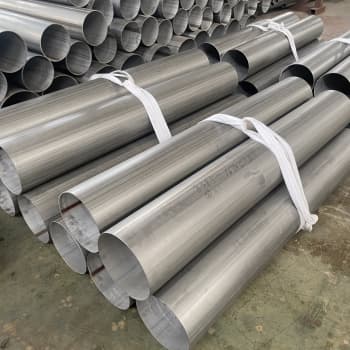
ASTM A312 TP321 Stainless Steel Pipe Specifications
| Pipe Specifications |
ASTM A312 / ASME SA 312 ASTM A213 / ASME SA 213 ASTM A269 / ASME SA 269 |
| Pipe Standard | DIN, JIS, ASTM, EN, GB, AISI, ASME |
| Pipe Thickness | 0.3mm - 50 mm |
| Welded Pipe size | 5.0 mm - 1219.2 mm |
| Seamless Pipe Outer Diameter | 6.00 mm OD up to 250 mm OD, Sizes up to 12" NB |
| Pipe Schedule | SCH 5, SCH10, SCH 40, SCH 80, SCH 80S, SCH 160, SCH XXS, SCH XS |
| Length | 6m, 12m, Cut Length |
| Form | Round Pipes, Square Pipes, Rectangular Pipe, Hydraulic Pipes, Custom Pipes, |
| Pipe & Tube Type | Seamless / ERW / EFW / Welded / Fabricated Pipe |
| Pipe & Tube End | Plain End, Beveled End, Treaded Pipe |
The failure 321 was built to prevent
When an ordinary austenitic stainless steel is heated in the 400-850°C range - during welding, slow cooling, or service - carbon comes out of solution and precipitates as chromium carbide at the grain boundaries. The carbide formation draws chromium from the adjacent metal, leaving a thin chromium-depleted zone that can no longer passivate.
In a corrosive medium, that depleted band corrodes preferentially and the metal falls apart along the grain boundaries: intergranular corrosion. The weld heat-affected zone of a non-stabilized grade is exactly where this happens, which is why welded 304 piping in certain process services develops the characteristic "knife-line" failures at the joint.
How titanium neutralizes the carbon
321 adds titanium to the classic 18-8 chemistry. Titanium is a stronger carbide former than chromium, so it combines with the carbon first, forming stable titanium carbides instead of chromium carbides. The chromium stays in solid solution, the grain boundaries stay rich, and the alloy keeps its corrosion resistance through welding and through service in the sensitizing temperature range.
The specification controls this with the titanium-to-carbon ratio: titanium must be at least five times the carbon content, which guarantees enough titanium to lock up the carbon.
The same logic is why 321 is supplied in a stabilized condition after solution annealing: the anneal puts the carbon into solution, and the titanium content ensures it reprecipitates as harmless titanium carbide rather than grain-boundary chromium carbide on subsequent heating.
Chemical composition per ASTM A312
| Element | Composition limit, % |
| C | 0.08 max |
| Cr | 17.0 - 19.0 |
| Ni | 9.0 - 12.0 |
| Ti | 5 x C min, 0.70 max |
| Mn | 2.0 max |
| Si | 0.75 max |
| P | 0.045 max |
| S | 0.03 max |
| N | 0.10 max |
| Fe | Balance |
Mechanical properties per ASTM A312
| Property | Minimum value |
| Tensile strength | 515 MPa (75 ksi) |
| Yield strength, 0.2% offset | 205 MPa (30 ksi) |
| Elongation | 35% |
321 offers room-temperature properties in the same range as 304 and 316L, and its creep and rupture strength at 550-750°C is higher than those grades, which is part of its value in elevated-temperature process service. In the annealed condition the alloy is fully austenitic, ductile, and easy to fabricate with standard shop practice.
321 versus 321H: where the H belongs
| Property | TP321 | TP321H |
| Carbon | 0.08 max | 0.04 - 0.10 |
| Titanium | 5 x C min | 4 x C min |
| Strength driver | Corrosion resistance | Elevated-temperature creep strength |
| Typical use | Welded and corrosion-critical piping | Pressurized service above 550°C |
321H carries a controlled higher carbon range that provides carbide strengthening, giving it better creep and rupture strength for pressurized service above roughly 550°C. The rule: 321 for corrosion-critical welded piping, 321H for hot pressurized lines where creep governs the wall.
Where 321 is the right pipe
- Welded piping in services where 304 would sensitize - food, chemical, and process plants with repeated heat input
- Aircraft and aerospace exhaust, manifold, and engine components
- Chemical process piping at elevated temperature, including acid and oxidizing media
- Superheater and heat-exchanger tube applications where stabilized structure is required
- Thermal-expansion loops and equipment requiring good elevated-temperature properties
321 is also the standard answer where the design cannot guarantee that welding will not be followed by a sensitizing heat input - its stabilized structure makes the heat-affected zone resistant without post-weld heat treatment.
Where 321 is not the answer
- High-chloride marine and seawater service - 321 is not chloride-SCC resistant, use 6Mo or duplex grades
- Aggressive reducing acids where molybdenum-bearing grades are required
- Cost-sensitive non-welded general service where 304 or 316L is adequate
Ordering checklist
- Grade and standard: "TP321 seamless pipe, UNS S32100, per ASTM A312"
- Size: OD x wall in millimetres, or NPS + schedule
- Form: seamless or welded (and examination level if welded)
- Service temperature on the enquiry - selects 321 or 321H
- Certificate: EN 10204 3.1 with heat chemistry, titanium analysis, and tensile results
321 is the stabilized member of the 18-8 family: it costs a little more than 304, and it buys certainty where welding and heat meet corrosion. For designers who cannot afford a sensitized heat-affected zone, the titanium row on the certificate is the difference between a pipe that lasts and a pipe that fails along the grain boundaries.
FAQ
Q: About ASTM A312 TP321 Stabilized Austenitic Pipe price per kg?
A: Prices ranges from $2 to $5 per kg, vary depending on size, wall thickness, supplier etc.
Q: How long does your delivery time take?
A: Delivery time is within 5-21 days
Q: Is There Sample Service?
A: Samples Are Provided Free Of Charge
Q: What Is The Minimum Order Quantity?
A: No Minimum Order Quantity
Q: How to pack the products?
A: The inner layer has a waterproof paper outer layer and is fixed with a fumigation wooden pallet.
Q: Exported Countries
A: Brazil, South Africa, Indonesia, India, Singapore, Malaysia, Iran, Russia, UAE, Chile, Laos, etc
Hot Tags: 321 stainless steel pipe, UNS S32100, TP321 pipe, ASTM A312, 321 seamless pipe, 321H pipe, titanium stabilized stainless steel, intergranular corrosion, 310S Stainless Steel Tube, 316L Stainless Steel Tube, 317L Stainless Steel Tube, 321 Stainless Steel Pipe, 347H Stainless Steel Pipe, ASTM A213
Previous
316LN Seamless PipeYou Might Also Like


Send Inquiry