


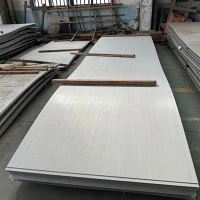


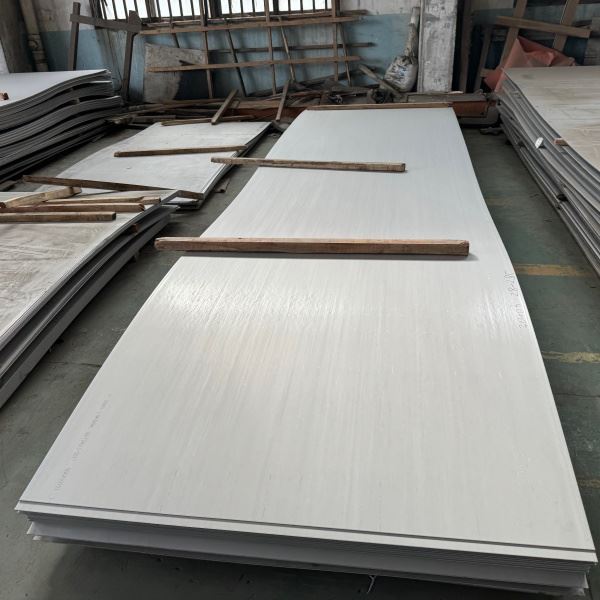
17-4PH Plate ASTM A693 Stainless Steel Plate
1.Thickness: 0.1mm - 150mm
2.Width: 1000 - 3300mm
3.Length: 1000 - 12000mm
4.Equivalent: UNS S17400, WNR.1.4542, Type 630
5.Standard:ASTM A 693,ASME SA 693,AMS 5604
17-4PH plate, UNS S17400 with AISI designation 630 and EN material number 1.4542, is the precipitation-hardening stainless steel that combines the workability of austenitic grades with strength levels normally reserved for tool steels. In the aged H900 condition the plate reaches a minimum tensile strength of about 1310 MPa, yet it starts life as a soft, weldable martensitic plate at roughly 38 HRC maximum, which is the entire point of the grade: fabricate in the soft condition, age to full strength after forming and welding, and avoid the distortion and machining cost of working a fully hardened material.
Product Forms
Bar & Rod
Plate & Sheet
Coil & Strip
Pipe & Tube
Fitting: Flange, Tee, Elbow, Reducer etc.
Forging: Ring, Shaft, Circle, Block etc.
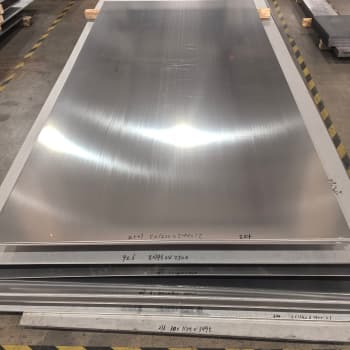
SS 17-4 PH Plate Specification
| Grade | Stainless Steel 17-4 PH | UNS S17400 |
| Standard | ASTM B625 / ASME SB625 |
| Thickness | 0.1mm To 100 mm |
| Length | 2000mm, 2440mm, 3000mm, 5800mm, 6000mm, etc |
| Width | 1000mm, 1219mm, 1500mm, 1800mm, 2000mm, 2500mm, 3000mm, 3500mm, etc |
| Surface | 2B, 2D, BA, NO.1, NO.4, NO.8, 8K, mirror, checkered, embossed, hair line, sand blast, Brush, etching, etc |
| Finish | Hot rolled plate (HR), Cold rolled sheet (CR), 2B, 2D, BA NO(8), SATIN (Met with Plastic Coated) |
| Form | Sheets, Plates, Coils, Slatting Coils, Perforated Coils |
Chemical Composition (ASTM A693, UNS S17400)
The composition below is the A693 acceptance window. The defining pair is chromium plus nickel at the 4:1 ratio that gives the martensitic transformation, with copper and niobium added for the precipitation reaction that produces the hardening.
| Element | Min % | Max % |
| Chromium (Cr) | 15.0 | 17.5 |
| Nickel (Ni) | 3.0 | 5.0 |
| Copper (Cu) | 3.0 | 5.0 |
| Niobium + Tantalum (Nb + Ta) | 0.15 | 0.45 |
| Carbon (C) | - | 0.07 |
| Manganese (Mn) | - | 1.0 |
| Silicon (Si) | - | 1.0 |
| Phosphorus (P) | - | 0.040 |
| Sulfur (S) | - | 0.030 |
Read the chemistry against the heat-treating logic. The chromium range, 15 to 17.5 percent, gives the grade its corrosion resistance, comparable to 304 in mildly corrosive service. The nickel and the low carbon hold the martensite soft enough to machine before aging. The copper, at 3 to 5 percent, is the hardener: on aging at 480 to 620 deg C, copper precipitates out as fine particles inside the martensitic matrix and locks the dislocation structure, which is what lifts the yield strength from about 760 MPa in the annealed condition to over 1170 MPa at H900. The niobium addition controls grain growth and contributes a small secondary hardening effect.
Mechanical Properties: The Full Aging Envelope
17-4PH Plate ASTM A693 Stainless Steel Plate is ordered by condition, and the condition is set by the aging temperature. The values below are the typical minimums published by the specification and mill data for plate; the exact acceptance values depend on the condition ordered and the product form.
| Condition | Aging Temperature | Tensile Strength (MPa) | Yield Strength (MPa) | Elongation | Hardness (HRC) |
| Condition A (annealed) | - | max 1250 | approx. 760 | - | max 38 |
| H900 | 482 deg C | min 1310 | min 1170 | min 10% | min 40 |
| H925 | 496 deg C | min 1240 | min 1140 | min 10% | min 38 |
| H1025 | 552 deg C | min 1170 | min 1070 | min 12% | min 35 |
| H1075 | 579 deg C | min 1140 | min 1000 | min 13% | min 32 |
| H1100 | 593 deg C | min 1070 | min 965 | min 14% | min 31 |
| H1150 | 621 deg C | min 1000 | min 790 | min 16% | min 28 |
The table is a selection tool in itself. H900 delivers maximum strength and hardness for wear surfaces and highly loaded brackets, at the cost of the lowest toughness. H1150 restores ductility and impact resistance for thicker sections and pressure-retaining duties, sacrificing about 25 percent of the H900 strength. Intermediate conditions H1025 and H1075 give the most used balance of strength, toughness and resistance to hydrogen embrittlement in sour service. The condition ordered must match the final application, because the plate cannot be re-aged in the field to a different condition without the full solution-treat and age cycle.
Physical Properties
| Property | Value |
| Density | 7.78 g/cm3 |
| Melting Range | 1400 - 1440 deg C |
| Modulus of Elasticity | 196 GPa |
| Thermal Conductivity (100 deg C) | 18.3 W/m.K |
| Mean Coefficient of Expansion (0-100 deg C) | 10.8 x 10⁻⁶ /K |
| Magnetic | Magnetic in all conditions (martensitic) |
Two physical notes matter in plate design. The grade is magnetic in every condition, unlike austenitic stainless, which affects proximity switches, solenoid valves and any magnetic-interference-sensitive assembly. The coefficient of thermal expansion is close to that of carbon steel, which simplifies dissimilar-metal joint design in structural applications.
Fabrication Sequence: Soft In, Hard Out
- Forming: plate is sheared, rolled or brake-formed in Condition A, where hardness is 38 HRC maximum and the material behaves like a workable martensitic stainless.
- Machining: drilling, milling and edge preparation are done before aging, avoiding the cost of machining at 40+ HRC.
- Welding: 17-4PH welds without preheat, with matching or 17-4 chemistry filler; the weld zone softens and is restored to full strength by the final aging treatment.
- Aging: the fabricated assembly is aged at the selected temperature, typically for 4 hours plus 1 hour per 25 mm of section thickness, and air-cooled.
One caution: the plate should not be aged below 480 deg C for long periods, and components that will be plated for corrosion protection require a hydrogen-embrittlement-relief step after plating, because the high-strength microstructure is susceptible. For sour-gas service, specify the H1025 or higher condition, where the improved toughness and reduced hardness are required by NACE MR0175 for this grade.
Corrosion Resistance
17-4PH Plate ASTM A693 Stainless Steel Plate offers corrosion resistance in the general class of 304 stainless in many media, with better resistance to atmospheric corrosion and to dilute acids than hardenable carbon or alloy steels. Its corrosion performance depends on the aging condition: higher-strength conditions (H900, H925) are more prone to stress-corrosion cracking in chlorides and should be avoided for chloride service, while H1150 and higher-aging conditions give markedly better SCC resistance. Where chloride cracking is a risk, the plate is used in the over-aged conditions or replaced by a duplex or nickel-base alloy.
Key Applications
- Aerospace structural plate, engine mount brackets and fasteners requiring high strength-to-weight.
- Pump shafts, valve stems, impellers and wear rings in the oil and gas, chemical and food industries.
- Marine and offshore hardware where 304 is too soft and 316L lacks the strength.
- Medical and surgical instruments, and moulds and dies requiring hardness with corrosion resistance.
- Paper and petrochemical equipment where strength and moderate corrosion resistance are both required.
Ordering and Inspection Notes
Order 17-4PH plate by UNS S17400 and the ASTM A693 standard, and always state the condition (for example Condition A or H900, or annealed-then-aged). The mill certificate must list the heat analysis with copper and niobium values, the mechanical results for the condition delivered, and the hardness. Confirm plate thickness tolerance to A20/A480, flatness, and the edge condition (sheared, plasma-cut or machined).
For pressure and sour service, request the applicable code data sheet and NACE MR0175 compliance note, plus EN 10204 3.1 certification for full traceability. Because the mechanical values change with condition, receiving inspection should verify hardness and, where specified, tensile test results against the ordered condition, not against the generic grade values.
17-4PH plate is the workhorse precipitation-hardening stainless: it bends, cuts and welds like a stainless in the soft state and delivers tool-steel strength after a simple age. Specified by condition, verified by certificate, it is the economical high-strength plate for the aerospace, oil and gas, and processing industries.
FAQ
Q: About 17-4PH Plate ASTM A693 Stainless Steel Plate price per kg?
A: Prices ranges from $3 to $10 per kg, vary depending on size, wall thickness, supplier etc.
Q: How long does your delivery time take?
A: Delivery time is within 5-21 days
Q: Is There Sample Service?
A: Samples Are Provided Free Of Charge
Q: What Is The Minimum Order Quantity?
A: No Minimum Order Quantity
Q: How to pack the products?
A: The inner layer has a waterproof paper outer layer and is fixed with a fumigation wooden pallet.
Q: Exported Countries
A: Brazil, South Africa, Indonesia, India, Singapore, Malaysia, Iran, Russia, UAE, Chile, Laos, etc
Hot Tags: 17-4ph plate, uns s17400 plate, astm a693 17-4ph, 17-4ph stainless steel plate, aisi 630 plate, precipitation hardening stainless steel plate, 17-4ph h900 plate, 17-4ph sheet
Previous
No InformationYou Might Also Like


Send Inquiry