


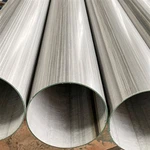
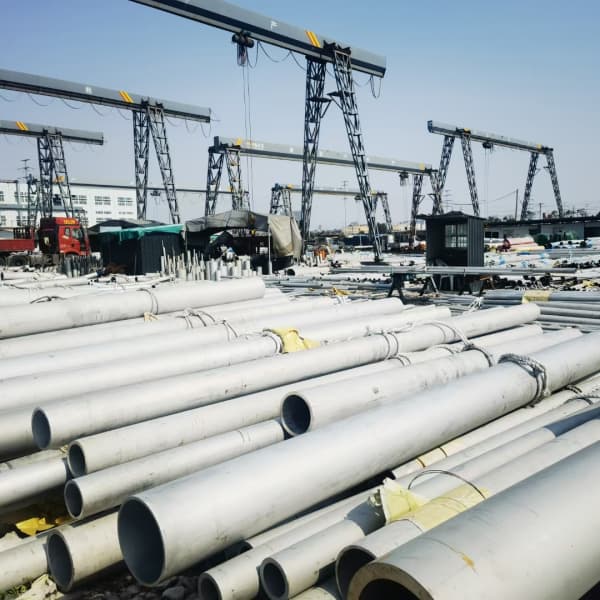
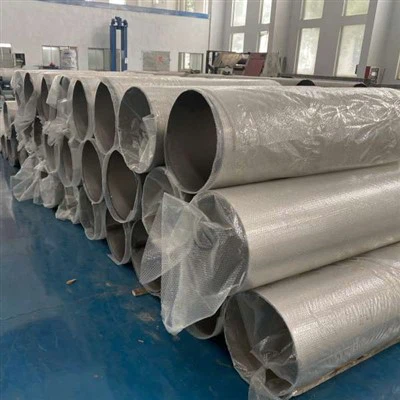
Hastelloy B3 Seamless Pipe
1. Standard: ASTM B622, ASTM B474, ASTM B619
2. Size: 1 / 2"NB TO 48 "NB IN
3. Thickness: SCH5~SCHXXS
4. Equivalent: Hastelloy B3, UNS N10675 , WNR.2.4600
Hastelloy B3 Seamless Pipe is the modern workhorse of the nickel-molybdenum alloy family, supplied seamless under ASTM B622 against UNS N10675. It was developed as the direct successor to Hastelloy B2 (UNS N10665) to solve one specific metallurgical problem: B2 lost its ductility and corrosion resistance when held in the 650-850°C range during welding or service, because the alloy precipitated an embrittling Ni-Mo phase at grain boundaries.
B3 adds controlled chromium, iron, and tungsten to the same Ni-Mo base, and that small compositional shift suppresses the precipitation. The result is a pipe that can be welded and used in the field with ordinary shop discipline, while keeping the outstanding resistance to hydrochloric acid and other reducing media that made the B-family famous.
Product Forms
Bar & Rod
Plate & Sheet
Coil & Strip
Pipe & Tube
Fitting: Flange, Tee, Elbow, Reducer etc.
Forging: Ring, Shaft, Circle, Block etc.
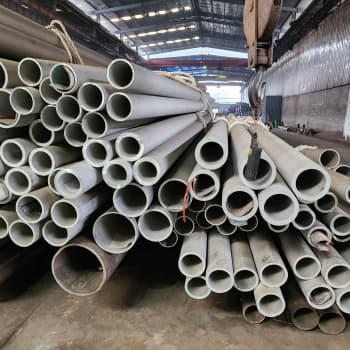
Chemical composition of Hastelloy B3 pipe per ASTM B622
The heat-analysis limits below are taken from ASTM B622 for UNS N10675. Nickel is the balance element at 65.0% minimum, and the molybdenum range of 27.0-32.0% is what gives the alloy its reducing-acid performance.
| Element | Composition limit, % |
| Ni | 65.0 min (balance) |
| Mo | 27.0 - 32.0 |
| Fe | 1.0 - 3.0 |
| Cr | 1.0 - 3.0 |
| Co | 3.0 max |
| W | 3.0 max |
| Mn | 3.0 max |
| Cu | 0.20 max |
| V | 0.20 max |
| Ta | 0.20 max |
| Al | 0.50 max |
| Ti | 0.20 max |
| Si | 0.10 max |
| C | 0.01 max |
| P | 0.030 max |
| S | 0.010 max |
Compared with B2, the B3 chemistry adds three deliberate elements: chromium at 1.0-3.0%, iron at 1.0-3.0%, and tungsten up to 3.0%. None of these is large enough to change the alloy's corrosion character, but together they stabilize the microstructure.
In B2, exposure to the 650-850°C range precipitates Ni7Mo6 intermetallic at grain boundaries, which destroys both ductility and corrosion resistance in the heat-affected zone of a weld. In B3 the same thermal history produces a stable single-phase structure, which is why B3 pipe can be welded, hot-formed, and put into service with the heat-affected zone left in the as-welded condition in most applications.
Mechanical properties of B3 pipe in the annealed condition
ASTM B622 specifies the following minimum mechanical properties for UNS N10675 seamless pipe in the solution-annealed condition, the delivery condition for virtually all B3 piping orders:
| Property | Minimum value (ASTM B622) |
| Tensile strength | 690 MPa (100 ksi) |
| Yield strength, 0.2% offset | 310 MPa (45 ksi) |
| Elongation in 2 in (50.8 mm) | 40% |
These guaranteed values are what appear on the mill test certificate, and they are identical to the B622 requirements for the other annealed Ni-Cr-Mo alloys, which makes wall-thickness calculations consistent across the product family.
Actual production values are higher: typical annealed B3 pipe runs about 755-790 MPa tensile with yield near 350 MPa, and elongation around 50-60% in small sizes. The alloy is fully structural for pressure piping and vessels, and it is frequently specified for lined or unlined hydrochloric acid piping where the design pressure rather than the corrosion allowance sets the wall.
Physical properties
The density of Hastelloy B3 is 9.22 g/cm³ (0.333 lb/in³), noticeably higher than the chromium-bearing alloys because of the high molybdenum content. The theoretical weight of B3 pipe is calculated with the standard nickel-alloy formula: weight in kilograms per metre equals 0.02466 times (outside diameter minus wall thickness) times wall thickness, with dimensions in millimetres.
A 60.3 mm (NPS 2) B3 pipe with a 5.54 mm SCH 40S wall therefore computes to approximately 7.48 kg/m, and this theoretical figure is the basis of quotation and freight calculations unless the order specifies actual weighed mass.
| Property | Value |
| Density | 9.22 g/cm³ |
| Melting range | 1330 - 1390°C (approx.) |
| Modulus of elasticity (room temp) | 216 GPa (approx.) |
| Electrical resistivity (room temp) | 1.37 μΩ·m (approx.) |
| Thermal conductivity, 100°C | 11.3 W/m·K (approx.) |
Manufacturing standards and product forms
Hastelloy B3 piping products are manufactured and supplied against the following specifications:
- ASTM B622 / ASME SB-622 - seamless nickel and nickel-cobalt alloy pipe and tube
- ASTM B619 / ASME SB-619 - welded pipe
- ASTM B626 / ASME SB-626 - welded tube
- ASTM B366 - wrought fittings and flanges for the alloy
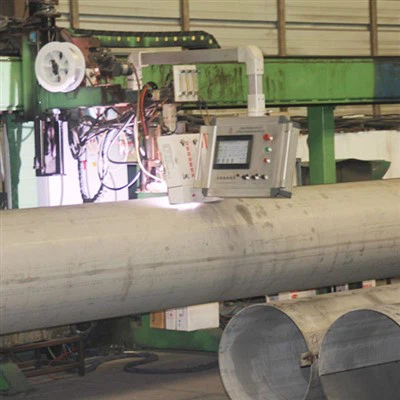
Seamless pipe under B622 is produced by piercing and working a billet of the B3 heat, followed by solution annealing and rapid cooling. The anneal dissolves any secondary phases formed during working and restores the fully austenitic single-phase structure on which the corrosion resistance depends. Because the alloy is thermally stable, the quench does not need to be as violent as for B2, and the heat-affected zone of a welded joint retains its corrosion resistance without a post-weld heat treatment.
Welded B3 pipe under B619 is formed from annealed strip and welded with matching ERNiMo-10 filler metal. The welded product is full-body annealed after welding, and for most hydrochloric acid services it is specified interchangeably with seamless. Seamless remains the default when the piping code, the client specification, or a sour-service requirement calls for it.
Available sizes and schedules
B3 seamless pipe is supplied in the following envelope, with intermediate sizes and custom walls available on project request:
| Parameter | Range |
| Outside diameter | 6.0 mm (1/8") to 219.1 mm (8"), larger sizes on project basis |
| Wall thickness | 0.5 mm to 18.26 mm (SCH 5S to SCH XXS) |
| Length | Fixed 6 m / 12 m, or random lengths per order |
| End finish | Plain end, beveled end, or threaded as required |
| Test | Hydrostatic test per ASTM B622 |
The standard stocking range for process pipe is NPS 1/8 to NPS 8 in SCH 10S, SCH 40S, and SCH 80S. Heavy-wall and large-diameter requirements are manufactured against project enquiry, and the lead time is quoted per order. When the drawing calls out a schedule rather than an explicit wall thickness, the ASME B36.10 wall is supplied unless minimum-wall calculation is specified.
Corrosion performance: the reducing-acid grade
Hastelloy B3 pipe resists reducing acids better than any of the chromium-bearing nickel alloys, because resistance in reducing media is carried by molybdenum, not chromium. The alloy is the standard piping material for hydrochloric acid over its useful range, and it performs well in dilute-to-mid-concentration sulfuric acid, in phosphoric acid, and in organic acid services such as acetic and formic acid.
It is not intended for strongly oxidizing environments: nitric acid, ferric chloride, and other oxidizing species destroy the Ni-Mo matrix quickly, so the alloy should never be specified where oxidizing excursions are possible.
| Environment | B3 behavior | Comment |
| Hydrochloric acid, all concentrations | Excellent | The defining service for the B-family |
| Sulfuric acid, dilute | Very good | Useful where stainless and C-alloys are marginal |
| Phosphoric acid | Very good | Common in fertilizer process piping |
| Acetic / formic acid | Good | Organic acid process lines |
| Nitric acid and oxidizing media | Not recommended | Rapid attack; use a Cr-bearing alloy instead |
The key difference from C276 and C22 is direction: those alloys balance oxidizing and reducing resistance and give up some performance in pure reducing acid; B3 is specialized for reducing media and gives up oxidizing resistance entirely. A process that is predominantly hydrochloric acid, with no oxidizing excursions, is B3 territory, and using C276 there wastes money on chromium that buys nothing. A process that alternates between acid and oxidizing chloride conditions is C-alloy territory, and B3 would fail.
Typical applications
B3 pipe is specified in plants where hydrochloric acid or other reducing chlorides are handled continuously:
- Hydrochloric acid production, storage, and transfer lines, including azeotropic and anhydrous HCl duty
- Chlorinated hydrocarbon and organic chloride process piping in chemical plants
- Alkylation units and catalyst regeneration systems in refineries
- Pulp bleaching chemical systems where chlorine dioxide stages use reducing conditions
- Pharmaceutical and agrochemical reactor and transfer lines handling reducing acids
- Metal pickling lines using hydrochloric acid
In each of these services the specification of B3 rather than B2 is now standard practice for welded construction, because the improvement in thermal stability eliminates the field failure mode that B2 exhibited at weld heat-affected zones. Existing B2 plants are progressively re-specified to B3 for new piping, and B3 is the alloy named in most current engineering standards for reducing-acid service.
Welding and fabrication
B3 pipe is welded with matching filler metal ERNiMo-10 (AWS A5.14 classification) for GTAW and GMAW, and ENiMo-10 (AWS A5.11) for SMAW. The B2 filler ERNiMo-7 must not be substituted, because it lacks the chromium and iron that give B3 its thermal stability, and the resulting weld deposit would revert to B2-like behavior.
No preheat is required, and no post-weld heat treatment is normally required. The alloy is sensitive to oxygen and nitrogen pickup in the molten state, so inert gas shielding on both the face and the root of the weld is essential, and the interpass temperature should be kept below 100°C in thick sections to avoid hot cracking.
Fittings and flanges for B3 systems are supplied to ASTM B366 of matching chemistry. The piping designer should state the filler class on the WPS, and welder qualification should follow a nickel-alloy procedure rather than a stainless steel procedure. Because the alloy is heavier and more sluggish in the weld pool than austenitic stainless steel, the fit-up tolerances and welding parameters are controlled more tightly, and the shop should be one that regularly works nickel alloys.
Quality control and certification
Every length of B3 pipe supplied against ASTM B622 is accompanied by the mill test certificate reporting heat chemistry, mechanical test results, and the non-destructive examination performed. The standard package includes the hydrostatic test required by the specification and, where the order requires it, eddy-current or ultrasonic examination of the full length.
Positive material identification (PMI) is recommended on receipt, because B3, B2, and the C-alloys are visually indistinguishable and the composition difference is not detectable by eye. Certificates are issued per EN 10204 3.1 or 3.2 as specified, and third-party inspection by SGS, BV, or TUV is arranged on request.
Hastelloy B3 pipe is a specialized product whose specification is driven by the corrosion envelope of the service, and the buying decision should be made on the media analysis and the temperature profile, not on price alone. When the line list specifies UNS N10675, the pipe should be ordered against ASTM B622 with the annealed condition stated, the schedule or wall thickness given explicitly, and the certificate format confirmed with the project QA plan.
FAQ
Q: About Hastelloy B3 Seamless Pipe price per kg?
A: Prices ranges from $25 to $40 per kg, vary depending on size, wall thickness, supplier etc.
Q: How long does your delivery time take?
A: Delivery time is within 5-21 days
Q: Is There Sample Service?
A: Samples Are Provided Free Of Charge
Q: What Is The Minimum Order Quantity?
A: No Minimum Order Quantity
Q: How to pack the products?
A: The inner layer has a waterproof paper outer layer and is fixed with a fumigation wooden pallet.
Q: Exported Countries
A: Brazil, South Africa, Indonesia, India, Singapore, Malaysia, Iran, Russia, UAE, Chile, Laos, etc
Hot Tags: Hastelloy B3 pipe, UNS N10675, ASTM B622, N10675 seamless pipe, Hastelloy B-3 tube, nickel molybdenum alloy pipe, 2.4600, hydrochloric acid alloy pipe
Next
No InformationYou Might Also Like



Send Inquiry