


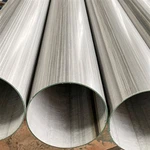

S321 Plate
1. Standard: AMS 5510
2. Thickness: 0.6mm - 80mm
3. Width: 100 - 2000mm
4. Length: 1000 - 12000mm Customer's Requirement
5. Grades: alloy 321, sus 321, uns s32100, din 1.4541
When a standard 18/8 alloy fails due to structural degradation, heavy industries look toward the S321 plate-a specialized titanium-stabilized austenitic stainless steel.
Securing high-quality metal components requires choosing the right material spec. If your operational infrastructure relies on severe thermal cycling or prolonged high-heat exposures, understanding the unique metallurgy, localized distribution networks, and performance boundaries of UNS S32100 / S32109 is critical.
HT PIPE is a SS 321 plate supplier with 15+ export experience. Contact us for more information and quotes for free!
Product Forms
Bar & Rod
Plate & Sheet
Coil & Strip
Pipe & Tube
Fitting: Flange, Tee, Elbow, Reducer etc.
Forging: Ring, Shaft, Circle, Block etc.

Specification of 321 AMS 5510 Sheet Strip
| Standard | AMS 5510:STEEL SHEET AND STRIP, CORROSION RESISTANT 18 Chromium - 8 Nickel (Weldable) |
| Width Available | 1800mm, 3000mm, 1500mm, 2000mm, 1000mm, 2500mm, 1219mm, 3500mm etc |
| Thickness | 4mm - 100mm |
| Supply Length | 2000mm, 2440mm, 6000mm, 5800mm,3000mm etc |
| Most Commom Finish | SATIN (Met with Plastic Coated), 2B, Cold rolled sheet (CR), BA NO(8), Hot rolled plate (HR), 2D |
| Surface types | sand blast, etching, NO.1, embossed, hair line, 2B, Brush, BA, 2D, checkered, NO.8, 8K, NO.4, mirror, etc |
| Available Plate Form with us | Foils, Perforated Sheet, Plain Sheet, Coils, Rolls, Flats, Shim Sheet, Chequered Plate, Strip, Blank (Circle), Ring (Flange) etc. |
| Metallurgical Attribute | S321 Plate (UNS S32100) | 304L Plate (UNS S30403) | 347 Plate (UNS S34700) |
| Primary Stabilizing Agent | Titanium | None (Low Carbon Control) | Niobium / Columbium |
| Max Service Temperature | 1500°F (816°C) | 800°F (427°C) (Structural degradation limit) | 1500°F (816°C) |
| Creep & Rupture Strength | High | Low to Moderate | High |
| Welding Arc Stability | Poor as consumable | Excellent | Excellent |
| Aqueous Corrosion Profile | Moderate | Excellent in ambient zones | Superior in strongly oxidizing media |
Why Choose S321 Over 304L?
While 304L reduces carbide precipitation by maintaining a lower carbon content (≤0.03%), it lacks the high-temperature strength required for load-bearing structures at elevated temperatures. S321 offers significantly higher creep resistance and stress-rupture properties, making it better suited for continuous high-temperature service.
Why Choose S321 Over 347?
Alloy 347 utilizes niobium to stabilize the carbon. While 347 performs slightly better in highly oxidizing aqueous environments at lower temperatures, S321 is often more readily available and cost-effective for high-temperature mechanical assemblies.
Welding Characteristics
The presence of titanium introduces specific considerations during welding operations. Titanium does not transfer efficiently across a high-temperature electric welding arc. Therefore, S321 should not be used as a filler metal/consumable.
When welding S321 parent plates, fabricators typically utilize Grade 347 filler wire or electrodes. The niobium in the 347 filler stabilizes the weld pool effectively while ensuring the joint matches the corrosion resistance and high-temperature performance of the surrounding S321 base metal. A major advantage of this grade is that post-weld heat treatment (PWHT) is generally unnecessary to prevent intergranular cracking in the heat-affected zone (HAZ).
Machining and Work Hardening
Like most high-performance austenitic stainless steels, S321 work-hardens rapidly. To prevent glazing and premature tool failure during drilling, milling, or plasma cutting, machine shops should employ:
- Rigid setups with sharp, heavy-duty tooling.
- Positive, constant feed rates to ensure the cutting edge stays below the work-hardened layer created by previous passes.
- Ample sulfurized cutting fluids to dissipate heat from the tool-metal interface.
Key Applications Across Heavy Industries
Petrochemical and Refining Bellows
Refineries process volatile hydrocarbon streams at extreme temperatures. Expansion joints, thermal insulation liners, and refining cat-crackers rely on the mechanical stability of S321 plate to manage continuous thermal expansion and contraction cycles without developing micro-cracks.
Aerospace Exhaust and Manifold Systems
Piston-engine aircraft components and jet engine components endure rapid thermal shifts. The titanium stabilization within the alloy helps maintain the structural integrity of exhaust collectors, manifolds, and stack assemblies under high thermal loads.
Power Generation Boilers and Heat Exchangers
In modern power generation plants, heavy-gauge plates are fabricated into high-pressure steam boiler components, heat exchanger tubesheets, and superheater tube supports. Here, the alloy's resistance to scaling helps prolong maintenance intervals.
FAQ
Q: About s321 plate price per kg?
A: Prices ranges from $3 to $5 per kg, vary depending on size, wall thickness, supplier etc.
Q: How long does your delivery time take?
A: Delivery time is within 5-21 days
Q: Is There Sample Service?
A: Samples Are Provided Free Of Charge
Q: What Is The Minimum Order Quantity?
A: No Minimum Order Quantity
Q: How to pack the products?
A: The inner layer has a waterproof paper outer layer and is fixed with a fumigation wooden pallet.
Q: Exported Countries
A: Brazil, South Africa, Indonesia, India, Singapore, Malaysia, Iran, Russia, UAE, Chile, Laos, etc
Hot Tags: s321 plate, China s321 plate manufacturers, suppliers, 316l plate, 316l stainless plate, duplex stainless steel plate, duplex steel plate, s31803 duplex, super duplex plate
Previous
Grade 904L PlateYou Might Also Like


Send Inquiry